
The coordinates pointed toward something interesting, a deviation from the well-trodden paths around Palenque. Most travelers focus their attention on the Mayan ruins, a logical prioritization given their historical weight. However, my interest often gravitates toward the hydrological systems interacting with those ancient stone structures. I was tracking down mentions of a specific water feature, something whispered about in local forums but conspicuously absent from standard tourist itineraries: the Roberto Barrios Waterfalls.
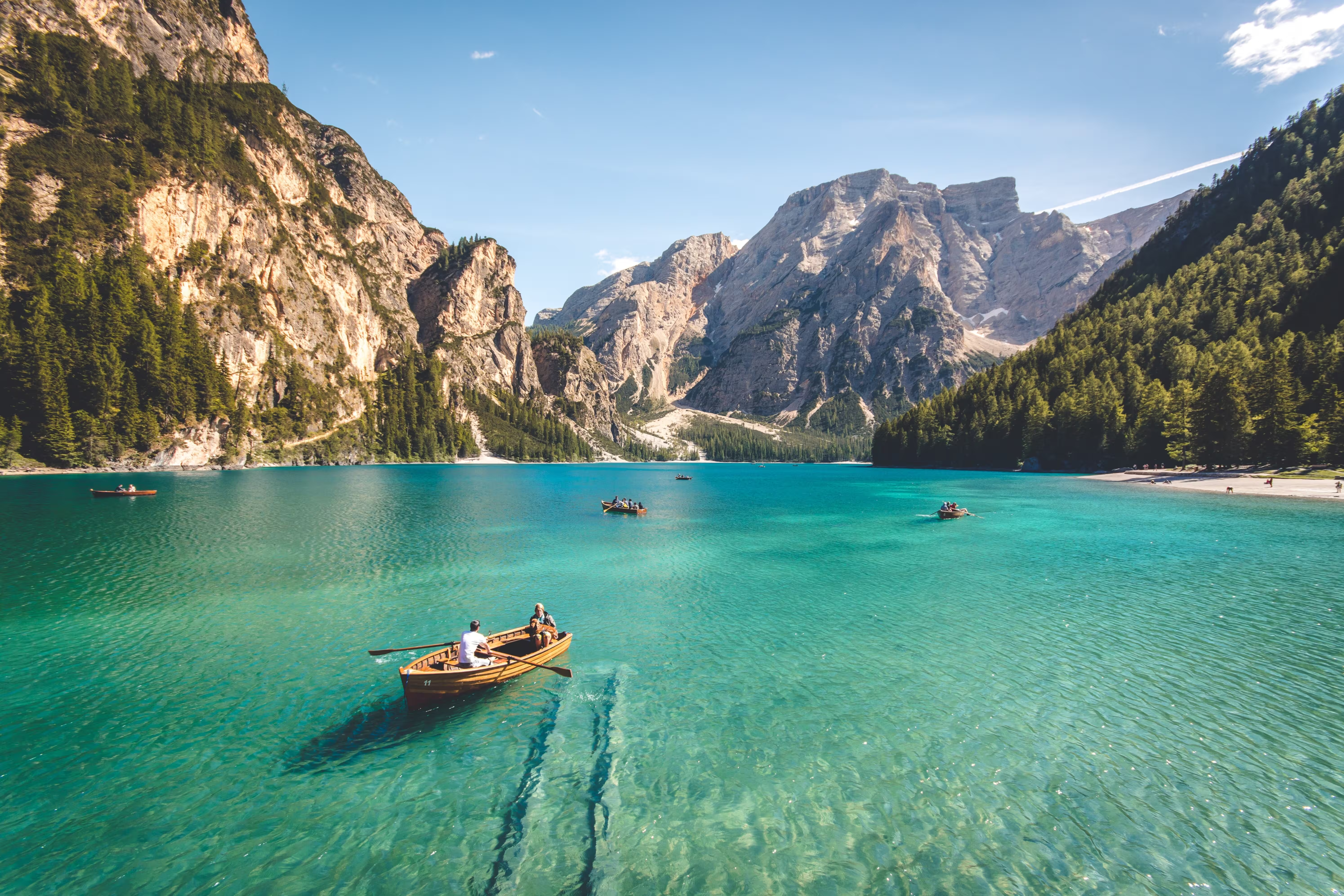
This isn't about finding the next Instagram hotspot; it's about understanding localized water chemistry and geological exposure. The journey itself demands a certain level of logistical calibration, involving a local transport arrangement that requires clear communication regarding destination specificity. What presents itself upon arrival, after navigating somewhat rudimentary access roads, is a series of cascades whose coloration defies the typical muddy browns associated with rainforest runoff during the wet season. I needed to understand the source of that specific turquoise hue.
Let's pause for a moment and reflect on the water color itself. That vibrant, almost unnatural blue-green is not standard for this region's surface water, which usually carries suspended silts from the surrounding lowlands. My initial hypothesis centered on dissolved mineral content, specifically calcium carbonate saturation, typical of karst topography. Think about limestone bedrock; as water percolates through it, it dissolves minerals. When the water precipitates these minerals, often due to changes in pressure or temperature as it emerges from underground conduits, it can scatter light in a way that produces this striking visual effect. The sheer volume of suspended, fine-grained particles, if they are the right size and composition, acts as a natural Rayleigh scattering medium, favoring the shorter wavelengths of visible light.
Examining the flow dynamics, I noted that the cascades are tiered, not a single sheer drop. This stair-step arrangement allows for significant aeration between pools, influencing the pH balance and potentially aiding in the precipitation process I suspect is occurring. The pooling areas themselves are surprisingly clear, allowing observation of the substrate, which appears whitish in sections, further supporting the high mineral deposition theory. Comparing the water samples I collected—one from the upper reaches before significant aeration and one from the lowest visible pool—will be essential when I return to the lab. The local guides, who navigate this area daily, noted that the intensity of the turquoise varies markedly depending on the time of year, suggesting a direct correlation with the underground water table level and the rate of mineral dissolution or transport. It’s a dynamic system responding predictably to seasonal inputs.
The infrastructure surrounding the site is minimal, which, from an observational standpoint, is preferable; artificial modifications often obscure the natural processes under investigation. There are some basic, locally constructed wooden steps and viewing platforms, clearly built for accessibility rather than large-scale tourist management. This low-impact approach means the immediate riparian zone appears largely undisturbed, offering a better chance to assess the native flora thriving in the highly mineralized water environment. I am particularly interested in the mosses and algae clinging to the submerged rocks; their tolerance limits for elevated calcium levels could provide further data points on the water chemistry profile. The constant mist generated by the heavier falls creates a microclimate that contrasts sharply with the drier surrounding jungle canopy. We are looking at a closed-loop hydrological system where input equals output, modulated only by evaporation rates and seasonal rainfall patterns.