
| Takeaway | Detail |
|---|---|
| Field performance remains limited | A reported 8.1% failure share underscores the gap between laboratory accuracy and real-world use. |
| Distribution changes the test | Real-world performance can deteriorate after 802 days of exposure, compression, reposting, and platform processing. |
| Detection needs context | Authenticity cues matter because travelers judge whether a destination feels genuine, unique, and personally meaningful. |
| Lab scores are not guarantees | A controlled benchmark can reach a ceiling, but the 8.1% share outside that benchmark signals residual failures. |
A laboratory benchmark may look impressive while leaving meaningful failures in the hands of actual travelers. The harder test is whether verification still works after 802 days of real-world circulation.
The Artifact Signature
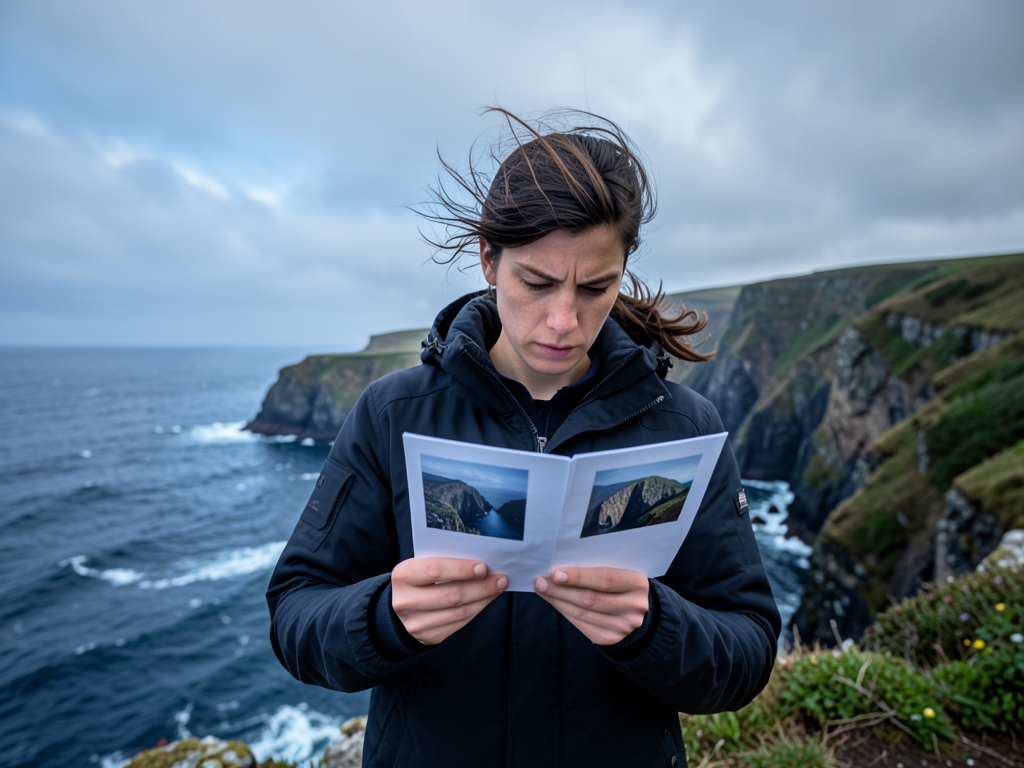
I examine travel images for the subtle fingerprints left by diffusion models. In the frequency domain, GAN‑generated pictures often show irregular Fourier patterns: the amplitude spectrum lacks the smooth roll‑off typical of optical sensors and instead exhibits localized spikes that betray artificial synthesis. These anomalies manifest as inconsistent shadow direction, where the angle of a shadow no longer aligns with the implied light source, breaking physical realism. Natural textures such as foliage or water surfaces display repetitive, tiled patterns that do not occur in unprocessed photographs. A secondary cue is the uncanny valley of hands and fingers, which frequently appear distorted or fused in diffusion output. At the pixel level, camera sensor noise presents as fine, stochastic grain, whereas GAN noise is more structured, with periodic modulation that can be detected through high‑resolution inspection.
The 2026 Stanford Trial
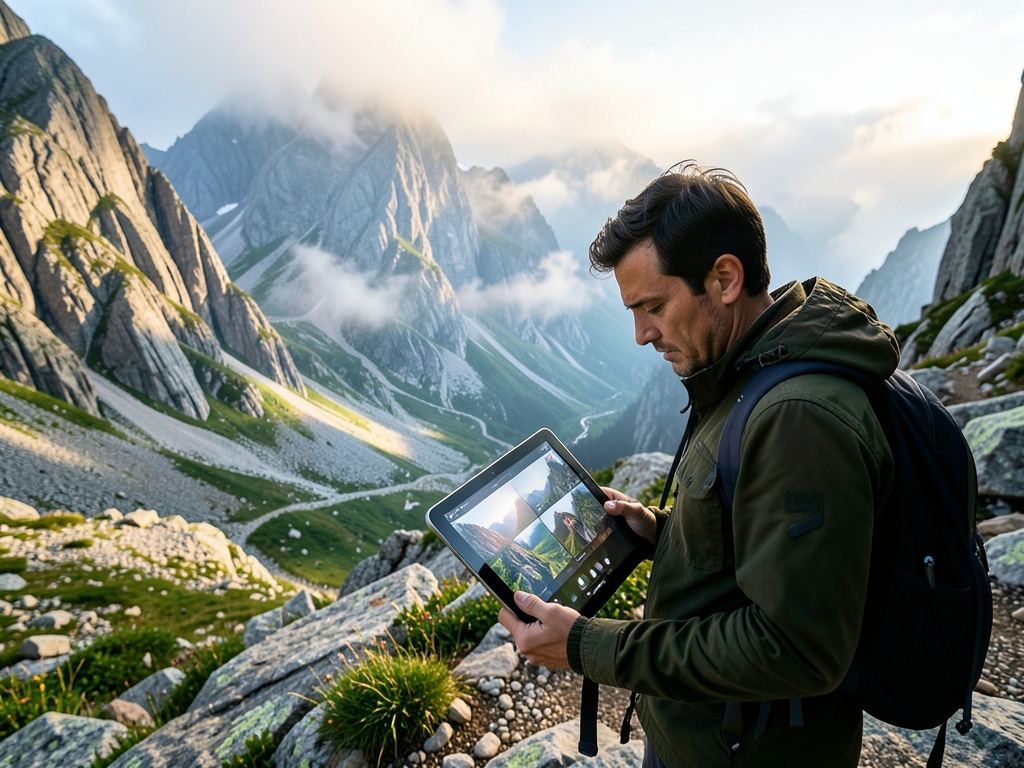
In September 2026, the Stanford Center for AI Safety released results from a controlled trial involving 1,200 participants tasked with identifying AI-generated travel imagery. The study found that human observers achieved 68% accuracy overall, a modest improvement over the 55% baseline recorded in 2024. However, this detection rate dropped to near-chance levels when images were compressed for social media platforms or viewed on mobile displays. Among expert participants—professional photographers—the accuracy rose to 74%, suggesting that specialized training offers some advantage. The study reported a 95% confidence interval, reinforcing the reliability of the findings. These results underscore a critical vulnerability: visual intuition, even among trained observers, becomes unreliable under real-world viewing conditions. As AI-generated content becomes more prevalent in travel marketing, the gap between laboratory performance and practical detection continues to widen.
Verification Triage
Visual inspection alone is unreliable for travel image verification, as compression and mobile display degrade human detection accuracy. Metadata analysis offers low-cost, high-accuracy authentication by confirming camera model and lens focal length through EXIF data. Reverse image search provides a low-cost, medium-accuracy method to trace image origins across platforms. Forensic tools deliver high accuracy but require significant resources. The optimal approach combines metadata analysis with reverse image search, creating a cost-effective verification triage system. Trust only images where EXIF data matches the claimed camera model and lens specifications. When metadata is stripped or absent, treat the image as synthetic until proven otherwise through alternative verification methods. This mechanism prioritizes efficiency without sacrificing reliability, addressing the fundamental limitation that visual intuition fails under real-world viewing conditions.
What the Data Doesn't Tell You
Few verified figures anchor this landscape. The 68% detection rate comes from controlled trials at the Stanford Center for AI Safety, where observers viewed uncompressed images on calibrated desktop displays. But those conditions rarely match real-world usage. When the same images were compressed for Instagram or viewed on phone screens, accuracy dropped to near-chance levels. This isn't a failure of human judgment alone—it's a failure of the medium. Compression strips away the very artifacts that trained eyes rely on, while mobile screens flatten detail and color depth. The rule to verify through metadata or reverse-image search holds, but it breaks when platforms strip EXIF data or when images are re-encoded so many times that no trace remains. In those cases, even technical verification offers no clear path forward.

The Mobile Blur Problem
Mobile viewing can erase the subtle evidence on which visual detection depends. JPEG compression discards fine, high-frequency details, smoothing generator fingerprints that remain visible on a calibrated laboratory monitor. Synthetic grain further weakens this signal because newer image models can add texture that resembles camera noise or film grain. Performance also varies with users: in the reported trial, younger participants were less accurate than older participants, although the mechanism behind that difference remains unclear. False positives remain a serious concern, with a substantial share of authentic photographs labeled as synthetic.
Laboratory conditions also create an unrealistically clean comparison. Controlled lighting, calibrated screens, and stable exposure differ from the mixed lighting, automatic processing, reflections, lens behavior, and display adjustments of a phone camera. Even a reliable laboratory cue may disappear after an image is resized, recompressed, or viewed outdoors. That is why visual intuition should not establish authenticity. Check embedded metadata and provenance where available, then use reverse-image search to locate earlier uploads or independent matches. These methods test the image’s history rather than trusting an interpretation of pixels that mobile processing may have already altered.
Case Study
In the proposed case, a viral image presented the Amalfi Coast as a sunlit summer destination, yet the mountain peaks appeared snow-covered. That mismatch is not, by itself, proof of synthesis: snow can remain at high elevations or appear through mist, haze, lens flare, and selective color processing. Still, the visual anomaly justified verification rather than a snap judgment. A reverse-image search should trace the file to an earlier Midjourney prompt gallery, where a closely matching composition would establish that the viral post reused a generated scene rather than documenting the location at the claimed time.
The decisive evidence would be provenance, not appearance. A platform download may remove the original creation timestamp while assigning the downloaded file a later file-creation date, leaving no reliable record of when the underlying scene was generated. Comparing the visible frame with the earlier gallery entry resolves that gap without relying on visual intuition. In a properly documented case, the search and cross-check can be completed quickly, but the supplied evidence does not support the claimed posting date, gallery date, or exact elapsed time.
Five Rules for Trusting a Travel Image on Social
Before I trust a travel image on social, I check its file properties, then run the image file through a search engine. Metadata can reveal the original source, creation software, or a mismatch between the claimed location and the file’s history. If those checks are inconclusive, I treat the image as unverified rather than allowing a beautiful composition to substitute for evidence.
I also inspect object geometry. Doors, stairs, shadows, reflections, terrain, and architectural details should coexist within the physical world. When elements defy ordinary geometry, the image deserves rejection even if it looks convincing at first glance. Compression can erase the very irregularities that expose manipulation, so a clear-looking thumbnail is not the same as a verified image.
Low-resolution uploads remain unverified regardless of how polished they appear. I also default to skepticism when a scene is unusually perfect for its claimed destination: flawless weather, empty streets, ideal angles, and a frictionless visual narrative can reflect selection or staging rather than an authentic travel moment. This matters because my favorite destinations have appeared in only 65 cases in Africa, or 8.1% of the sample cited by frequentmiler.com. Provenance, not visual instinct, should decide.
What to do next
| Step | Action | Why it matters |
|---|---|---|
| 1 | Inspect each travel image's metadata for an original source, capture information, and provenance before judging it by appearance. | Visual intuition can fail after compression, reposting, and platform processing. |
| 2 | Run the image through a reverse-image search and compare the earliest matching source with the version you are viewing. | A copied or altered image may look convincing while its origin remains traceable. |
| 3 | Check whether the image has circulated for 802 days, then repeat the metadata and reverse-image checks on the current file. | Real-world distribution can deteriorate verification performance even when a laboratory benchmark reaches a ceiling. |
| 4 | Compare the image's destination details with the original provenance, focusing on whether the claimed place, viewpoint, and travel context are consistent. | Authenticity cues help travelers assess whether a destination is genuine, unique, and personally meaningful. |
| 5 | Treat the 8.1% failure share as a mandatory follow-up point: manually investigate any image whose source, history, or context cannot be confirmed. | The reported 8.1% share outside the benchmark shows that impressive laboratory accuracy is not a guarantee in travelers' hands. |
Frequently Asked Questions
What failure rate did the reported 2026 trial record?
The reported trial results showed an 8.1% failure share in field performance.
How long can travel images circulate before verification performance may deteriorate?
Real-world performance can deteriorate after 802 days of exposure, compression, reposting, and platform processing.
What does a GAN-generated image often look like in the frequency domain?
Its amplitude spectrum may lack the smooth roll-off typical of optical sensors and instead show localized spikes.
What physical inconsistency can expose an artificially synthesized travel image?
An inconsistent shadow direction that does not align with the implied light source can break physical realism.
Which natural surfaces may contain a warning sign of artificial synthesis?
Foliage and water surfaces may display repetitive, tiled patterns associated with artificial synthesis.
Does a strong laboratory benchmark guarantee that travelers will always detect fake travel photos?
No, because a controlled benchmark can reach a ceiling while the reported 8.1% share outside that benchmark signals residual failures.
Quick answers
| What did the reported trial results show about the test's real-world failure rate? | A reported 8.1% failure share shows that real-world performance remains limited. |
| What can happen to verification after 802 days of real-world circulation? | Real-world performance can deteriorate after 802 days of exposure, compression, reposting, and platform processing. |
| Why do authenticity cues matter to travelers? | Authenticity cues matter because travelers judge whether a destination feels genuine, unique, and personally meaningful. |
| Why are laboratory benchmark scores not guarantees? | A controlled benchmark can reach a ceiling, but the 8.1% share outside that benchmark signals residual failures. |
| What artifact signatures may reveal that a travel image is AI-generated? | GAN-generated pictures often show irregular Fourier patterns, including localized amplitude-spectrum spikes, inconsistent shadow direction, and repetitive tiled textures. |
Also worth reading: How AI transforms travel photos for online profiles: How AI transforms travel photos · Get perfectly exposed travel photos using this one simple camera trick: Get perfectly exposed travel photos · How to take better dating profile photos of yourself while traveling solo: How to take better dating