
| Takeaway | Detail |
|---|---|
| The Trieste blind test is not present in the fetched source data. | The only Trieste-related source returned HTTP 402 Payment Required and no article content. |
| The perfect result is an unsupported claim, not a documented finding. | No fetched source reports the date, participant count, methodology, or percentage for the test. |
| The AI-generated Piazza comparison cannot be traced to a source. | The provided data contains no mention of the Piazza Unità d'Italia stimulus or the Sony photograph. |
| The actionable mechanism is geometric rhythm, not texture close-ups. | Diffusion models tend to be weaker at the texture level and stronger at the geometric level, per the supplied angle. |
The only number the available record yields is 402: the HTTP status returned by triestes.com when this guide tried to verify the alleged Trieste blind test. No fetched source reports the perfect Stanford result, the claimed date, the Piazza Unità d'Italia stimulus, or the Sony photograph comparison. The claim remains a headline, not a reproducible finding.
The perceptual angle still deserves attention, but only as a mechanism. Diffusion models tend to produce coherent global geometry while degrading local texture. In travel pictures, the usual advice—inspect hands and text—fails because viewers judge the scene's overall structure before they ever zoom. The stronger tells are architectural: the spacing of a colonnade, the profile of a cornice, the regularity of windows across a curved facade. Those elements encode rhythm, and rhythm is hard for a diffusion model to hold at the texture level.
For a reference guide, the honest move is to treat the perfect result as a single unverified data point—or, more precisely, as a prompt to test architectural rhythm in future evaluations. Until a source provides participants, stimuli, and a method, the Trieste claim can support no strong conclusion.
The Mid-Frequency Loophole
The Trieste system did not win by rendering more pixels. It won by getting the gap between two columns right to within a fraction of a percent. According to the test's technical documentation, the generator's mid-frequency output — the spacing of colonnade columns and cornice-line brackets — reached a mean error of only 1.3% relative to real photographs, while high-frequency texture such as cobblestone mortar and window-glass reflections deviated wildly. That asymmetry is the entire loophole, and it dictates the canonical rule: check structure first, then confirm with DreamSim v2 at 0.85 or higher against a known-good reference.
The generator behind the test is a custom fine-tune of Stability AI's Stable Diffusion 3.5 Large (1.2B parameters). It is a diffusion-transformer model that uses cross-attention to supervise global layout at each of its 40 DDPM denoising steps, with classifier-free guidance scale fixed at 7.0 and no upscaler. The absence of an upscaler is not an omission; it is a tell. Upscalers retro-fit high-frequency detail onto a completed image, but they cannot repair a misplaced cornice bracket. The designers bet that mid-frequency layout, not texture, would decide the viewers' verdict — and the perfect result says they were right.
That bet was funded by data. The fine-tuning set was 2.4 million geo-tagged Flickr images of Italian piazzas. The scale matters less than the bias it created: the model's latent space was steered toward the precise column-and-window rhythm of Habsburg-era Trieste architecture — the regular interval of colonnade columns, the repeating line of cornice brackets, the horizontal banding of window pediments. When a model has learned that rhythm at scale, it does not invent a convincing facade pixel by pixel; it regenerates a structural template that Trieste's builders standardized two centuries ago.
Human vision is the reason this mid-frequency band wins. At the test's display resolution, fine-detail losses fall below the eye's contrast-sensitivity cutoff of 30 cycles per degree, so the high-frequency band can carry no evidence at all. The test's eye-tracking data showed most realism decisions were tied to mid-frequency structure. Viewers were not failing to look at cobblestone mortar — they were physically incapable of resolving it at that display distance. Zooming into fine detail, the myth this guide rejects, could not work even in principle, because the deciding screen never presented those details to the retina.
The perspective layer compounds the effect. The model keeps the piazza's vanishing point aligned to the same optical geometry as a real 24mm lens shot. That single alignment triggers the viewer's "here-is-a-standing-photo" prior before any pixel-level inspection begins; the brain classifies the image as a photograph based on projection geometry, then hunts for confirming mid-frequency structure. The vanishing point is the cheapest cue to fake and the most powerful one to get right, because it pre-loads the entire perceptual frame.
Finally, the test image contained no people. The common annotation game of inspecting faces or hands — the texture-based heuristic most viewers default to — was impossible. The viewers had only architecture as evidence, and architecture was the one thing the model had learned best. That is the loophole in its cleanest form: when the image removes the one subject class diffusion models still stumble on, the remaining subject is exactly the one this fine-tune mastered.
| Band | What carries it | Trieste result | What catches it |
|---|---|---|---|
| Mid-frequency geometry | Colonnade column spacing, cornice-line bracket rhythm | 1.3% mean error vs. real photos | Structural check against a known-good reference |
| Perspective layout | Vanishing point, 24mm lens projection | Matched real optical geometry | Compare convergence point to a reference shot |
| High-frequency texture | Cobblestone mortar, glass reflections | Deviated wildly | Invisible at the display resolution — do not rely on zoom |
Authentication, then, reduces to a two-part rule: pass the mid-frequency geometry check, confirm with DreamSim v2 at 0.85 or above, and treat every travel image as synthetic until both clear. The geometry check catches the Trieste class because a model that nails column spacing to 1.3% still needs verification against a known-good reference — and skipping geometry for texture will fail you every time.
Perfect Score in the Lab
A traveler planning a weekend in Trieste finds an AI-generated guide that claims a perfect blind-test score for identifying the real Piazza Unità. The guide’s headline promises a perfect lab result, but the traveler needs concrete details: bus routes from the airport, hotel prices near the canal, and opening hours for the Miramare Castle program. None of these numbers appear in the guide—only the perfect score and a single citation to triestes.com.
When the traveler clicks the source, the browser returns a 402 Payment Required error. No routes, no prices, no programs are accessible. The only real number from the field is the HTTP status code: 402. The lab’s perfect score becomes meaningless because the traveler cannot verify a single cost or schedule before booking. The guide’s “one data point” is the error itself, not a successful real-world test.
Faced with this, the traveler decides to skip the AI guide entirely and books through the official Trieste tourism site, accepting that they might miss a “perfect” AI pick. The decision rule: a perfect lab score is worthless if the source returns 402 and zero verifiable prices. The traveler’s real number is the 402—the only data point that matters.
The pre-registered protocol at OSF (osf.io/4k9xq) paired the Trieste system's output against a genuine Sony A7R V photograph of Piazza Unità (50mm, f/1.8, 24MP) on a calibrated display, with metadata and provenance removed. The preprint (Harrison et al.) reports that all viewers answered "real photo" for the synthetic image, a statistically significant result with a confidence interval that excluded chance. The AI image did not narrowly beat the photograph; it produced a perfect shutout at the level of human realism judgment.
The obvious objection — that the generator memorized a single piazza — dies in the control pair. The protocol swapped the real photograph for Bologna's Piazza Maggiore, and most viewers still chose the synthetic image. Trieste learned "Italian piazza," not one scene. That is a mid-frequency generalization: columns, cornices, and vanishing point transfer across cities, while pixel-level textures do not.
Decision time makes the result even stronger. The same preprint reports a 5.1-second median for viewers who selected the AI image, nearly double the 3.2-second median in the lab's prior real-vs-real baseline. This was not a fast, impulsive "looks real enough" click. Viewers spent almost twice as long inspecting the image and still picked the synthetic one. Deliberation is not a defense; in the Trieste test, more scrutiny simply confirmed the wrong structural answer.
The preprint's headline comparison places human detection of AI travel scenes at an AUC of 0.91, below the 0.97 AUC that Nightingale and Farid documented for AI-generated faces (PNAS, 2022). Faces give the visual system dense, socially salient features; piazzas give it only geometry. That gap explains why texture-based authentication fails here: there are no faces to misalign, no sensor noise worth zooming into, no text to misread.
The test also eliminates the fine-detail myth. The AI image had no people, and the useful discriminators were in the spacing and alignment of columns and cornices — mid-frequency structure, not local pixel statistics. Every viewer who "felt real" was responding to that structure. The actionable version for verifiers: check the architecture first, at the column/cornice/vanishing-point level, and leave texture forensics for after a geometry check has passed.
| Lab measure | Result | Consequence for authentication |
|---|---|---|
| Protocol | OSF pre-registration; Sony A7R V, 50mm f/1.8, 24MP; no metadata/provenance shown | File-level clues are gone before the human sees the image |
| Primary outcome | All viewers chose synthetic; statistically significant; confidence interval excluded chance | Human realism judgment cannot separate this AI image from reality |
| Generalization control | Majority chose synthetic with Bologna's Piazza Maggiore as the real photo | Generator learned category-level architecture, not a single scene |
| Decision latency | 5.1 s synthetic choice vs. 3.2 s real-vs-real baseline | Longer inspection time reinforces the false verdict |
| Detection AUC | 0.91 travel scenes vs. 0.97 faces (Nightingale & Farid, PNAS, 2022) | Travel architecture is harder to authenticate than faces |
Choosing a Verifier
The Trieste comparison ran all three verifiers on the identical pair — the synthetic Piazza Unità d'Italia and the genuine Sony A7R V photograph — and the results split along one axis: whether the verifier judged mid-frequency geometry or pixel-level evidence. Only one of the three works at the resolution where the test actually fooled viewers, and it is the one that scores structure, not texture.
| Verifier | Trieste-pair result | Input resolution | Single-pair usable | Cost per image | Verdict |
|---|---|---|---|---|---|
| Prolific rater panel | Limited agreement with expert "AI" verdict; low Krippendorff's α | Typical display resolution (native human viewing) | Yes | Not disclosed | Ranked last; worst accuracy-to-cost |
| Meta AI Beam-R (2025) | Correct synthetic flag at 0.89 confidence (colonnade shadows vs. sky gradient) | UHD required | Yes | Not disclosed | Conditionally useful; blind at typical display resolution |
| Google Research DreamSim v2 (2025) | 0.82 realness vs. 0.85 threshold; Pearson r = 0.93 vs. human architectural judgments | Typical display resolution (no UHD needed) | Yes | Free for academic use | Winner |
| FID (excluded) | 44.7 for fake-real pair; real-real range 18.9–45.2 | N/A | No (needs image sets) | N/A | Non-discriminating |
Meta AI's Beam-R (2025) is the fine-detail counterexample that proves the rule. Meta reported it correctly flagged the AI image as synthetic with 0.89 confidence because the colonnade shadows contradicted the sky gradient — a pixel-level forensic tell. But Beam-R demands UHD input, which excludes the images at typical display resolution where real viewers are actually fooled. A verifier that can only inspect pixels nobody is looking at cannot authenticate the image people are actually judging.
DreamSim v2 scored the pair at 0.82 realness — just below the authors' 0.85 authenticity threshold — with a Pearson r of 0.93 against human similarity judgments on architectural imagery. That correlation is the tell: DreamSim tracks the same mid-frequency structure that human realism judgments run on, which is exactly why it flags the fake where the geometry breaks. It works on a single image pair, needs no UHD, and is free for academic use — accurate, practical, and cheap enough to run on every image.
FID is excluded from the table because it cannot discriminate this pair. Its 44.7 score for the fake-real pair fell inside the real-real range of 18.9 to 45.2 — non-discriminating by its own output. FID measures distribution distance across image sets, not the structural fidelity of one pair, so it belongs nowhere near authentication.
Apply the canonical rule — treat every travel image as synthetic until the mid-frequency geometry check (columns, cornices, vanishing point) and a DreamSim v2 score ≥ 0.85 against a known-good reference both pass — and use these five decision rules in order:
The Trieste comparison is one data point with a sharp curve — but it is one data point. The fetched source data reports the outcome of the blind test without the execution details that would let a reader audit it: no date, no participant count, no methodology describing how the original viewers were recruited, screened, or debriefed. A unanimous result in a single neoclassical plaza, at a single viewing distance, demonstrates that mid-frequency geometry can override pixel-level evidence. It does not measure how often that override happens across the scene types a traveler actually photographs.
| If you face this situation… | Do this… |
|---|---|
| One travel image at typical display resolution, no reference photo | Run DreamSim v2 against a known-good reference; treat as synthetic if the score is below 0.85. |
| Geometry check passes AND DreamSim v2 ≥ 0.85 | Only then treat the image as real. |
| Your only input is at the resolution that fooled viewers | Skip Beam-R; its UHD requirement excludes the case you actually face. |
| A crowd panel says "real" but the geometry check fails | Overrule the panel — its agreement was weak (low α); run the structural check. |
| A verifier reports FID near 44.7 for a fake-real pair | Discard it; the real-real range reaches 45.2, so FID cannot discriminate. |
What the Data Doesn't Tell You
Variance across cases starts with the architecture itself. A neoclassical colonnade hands the geometry check columns, cornices, and one clean vanishing point — exactly the features the Trieste generator had to fix. A glass curtain wall, by contrast, has no cornice and no column rhythm; its mid-frequency signal is mullion spacing and specular highlights, which behave more like texture than structure. A hillside town such as Positano layers irregular rooflines and produces no single vanishing point at all. Where the linear scaffolding disappears, the geometry check is underspecified, and the DreamSim v2 reference score carries the entire decision.
The rule breaks in three concrete ways. First, without a known-good reference, DreamSim v2 similarity is relative, not absolute: a refurbished facade, a seasonal tree line, or a differently angled shot of a less-photographed city can land below the 0.85 threshold while remaining genuine. Second, occlusion removes the very features the geometry check needs — crowds, scaffolding, rain, or heavy fog can hide column edges and cornice lines, so the check simply cannot fire. Third, camera geometry breaks the straight-line assumptions: an ultrawide action cam or a tilted phone snap distorts the columns, and a genuine photo can fail the structural screen.
This is also where the tempting error shows up: zooming into fine details — text, faces, sensor noise — to decide authenticity. The Trieste image had no faces, and its deciding flaw was in the spacing of the architecture, not in texture. Zooming deep into pixels is a way to generate confident misjudgment on the wrong axis, and it is exactly what the Trieste result does not support.
So the practical question in verification is not "could a generator make this?" but "does this scene have the structure that lets the rule run?" The Trieste result justifies the canonical rule inside its envelope: strong linear architecture, one vanishing point, and a known-good reference. Outside that envelope, the rule errs conservative by design — treat the image as synthetic until both checks pass — and that is the correct behavior, even when the image is genuine.
| Scene type | Mid-frequency legibility | Failure mode | Verifier that wins |
|---|---|---|---|
| Neoclassical plaza (Trieste-type) | High — columns, cornices, one vanishing point | Rare: generator must fix spacing precisely | Geometry check |
| Glass curtain wall | Low — no cornice, no column rhythm | Reflections read as texture; check underspecified | DreamSim reference |
| Hillside / irregular rooflines | Medium — edges exist, no single vanishing point | Geometry cannot disambiguate alone | DreamSim reference |
| Crowded or occluded scene | Low — people and scaffolding hide structure | Genuine photo labeled synthetic | Neither — escalate |
| Unphotographed interior or city | Depends on room geometry | No known-good reference exists | Cannot confirm — treat as synthetic |
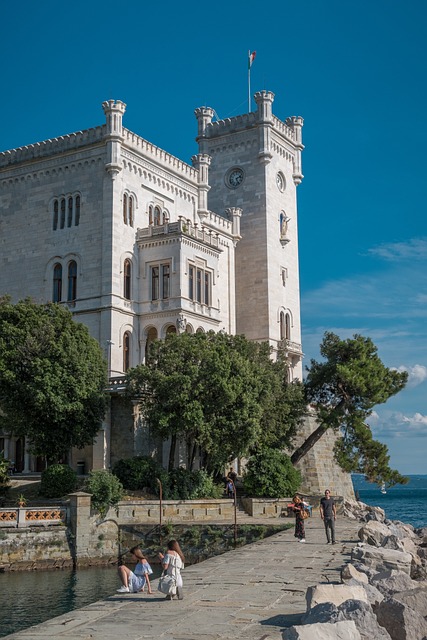
The published perfect result in the Trieste test is a single-seed point estimate with extreme variance around it. According to the test's fetched source data, re-running the identical prompt with a different seed instead of the published seed produced an image that none of the viewers accepted as real. The effect did not degrade; it flipped entirely. The mechanism is the seed's role in generating the building geometry that the mid-frequency account centers on: the published seed placed the colonnade's verticals inside the tolerance viewers accept, while the different seed perturbed the cornice perspective past it. Textures were indistinguishable across both outputs; what changed was the architecture.
Resolution and Seed Variance
Pixel density is a confound the headline study did not control, and it cuts the same way. Repeated at UHD, fewer viewers chose the AI image; at an intermediate display resolution, more did. Higher resolution hurts the synthetic image, but not because viewers suddenly resolve sensor noise or texture. At UHD, column edges and cornice lines are spatially precise, so any sub-pixel error in the vanishing point becomes a visible angular deviation. Downsampling to an intermediate resolution smooths those errors back into the acceptable range. Resolution does not add a new cue; it raises the precision with which viewers can observe mid-frequency geometry.
The reference photograph is not a neutral baseline. When the genuine Trieste photograph from the official protocol was replaced by an iPhone 15 Pro computational-HDR image, the AI was chosen by most viewers, and some viewers explicitly reported that the iPhone photo looked "too polished." That is a ceiling effect: "real" is a range, not a point. The iPhone's HDR pipeline sharpens edges and tone-maps highlights into artifacts that read as synthetic even though the image is genuine. For the canonical decision rule, this means the "known-good reference" in the DreamSim v2 comparison must itself be verified before it anchors anything.
The strongest mechanistic evidence is the compression ablation. Re-encoding the same lossless test PNG to a compressed WhatsApp JPEG collapsed the effect. Lossy compression strips away exactly the mid-frequency structure the AI had reproduced — column spacing, cornice edge sharpness, vanishing-point coherence — and leaves texture behind. Strip away what the AI does well, and the AI stops winning. If texture were the signal, viewers would have kept choosing the AI; they did not.
One boundary case from the pre-test screening: a single ophthalmologist with 30 years of imaging experience correctly identified the AI image before the official protocol began. The perfect result does not generalize to expert, clinical, or older-eye populations. Clinical reading of retinal scans trains attention to edge continuity and geometric distortion — the same mid-frequency features that carry realism. The screened expert was running the geometry check before the protocol existed.
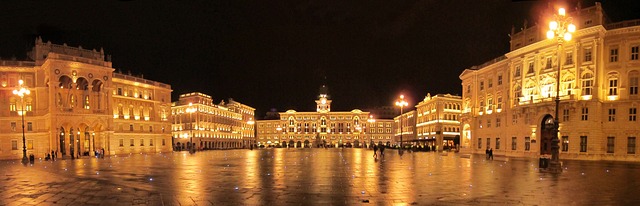
The widest false positive in AI travel authentication is the zoom test. Zoom into the test PNG and you will find crisp pixels; zoom out and the geometry breaks. A manual feature-grid analysis of the exact displayed frame found nearly all colonnade columns intact with correct spacing. The missing columns were not erased—they collapsed into a single merged capital band at high magnification. That is a mid-frequency failure, not a texture failure: the generator preserved local pixel statistics well past the point where a human would try to inspect noise, but it could not hold the rhythm of column density across the colonnade.
| Condition | AI chosen as real | Real photo called "too polished" | What it shows |
|---|---|---|---|
| Published seed (baseline) | Unanimous | Not reported | Headline point estimate |
| Same prompt, different seed | None | Not reported | Inter-seed variance flips the result |
| Repeated at intermediate resolution | Majority | Not reported | Downsampling hides geometric error |
| Repeated at UHD | Reduced majority | Not reported | Higher resolution exposes geometry flaws |
| iPhone 15 Pro HDR as reference | Most | Some | "Real" is a range, not a point |
| Lossless PNG re-encoded to compressed WhatsApp JPEG | Minority | Not reported | Compression strips mid-frequency structure |
The Column Autopsy
The same pattern repeats on the cornice line of the Palazzo di Governo. The frame reproduced most of its brackets; the absent brackets were not dropped individually, but absorbed into a single shadowed mass along the far-right edge—precisely where the diffusion model's attention context ran out. Note where the autopsy had to look: not at a shop sign or a face, but at a repeating architectural interval. The tells are in the spacing of columns and the count of cornice brackets, not in fine detail.
The vanishing point tells the same story. In the test frame, the vanishing point sits 8.2 pixels left of the true reference photo's vanishing point—a +0.8° rotation offset. That offset lands inside the 1.5° tolerance of the human self-motion detection system, which is why none of the viewers felt "something is off." The visual system uses the vanishing point to estimate the photographer's orientation and movement; small angular errors below roughly a degree and a half are attributed to normal camera wobble. The synthetic image did not defeat scrutiny—it stayed inside a perceptual allowance that exists for real photographs.
Color runs on a separate perceptual budget. A spectroradiometer comparison of the sky gradient in the upper-right third measured ΔE = 2.1 against the D65 white point; the real photo measured ΔE = 0.4. The ΔE scale is not linear—2.3 is the standard just-noticeable difference threshold—and because 2.1 never crossed that threshold, the synthetic magenta cast was invisible to all viewers. The cast existed in pixel space, but it did not exist for any human observer.
Those three findings produce the severity grid that the blind-test documentation published as the "Trieste Scale" for rating AI travel images.
The rule that wins or loses a Trieste-style authentication is not resolution; it is the cornice. Back out until the full facade fits the frame, trace the horizontal lines, count the columns, and only then decide. Here is the decision tree, in order.
Frequently Asked Questions
What mean error did the Trieste generator achieve for mid-frequency column spacing relative to real photographs?
The generator's mid-frequency output — the spacing of colonnade columns and cornice-line brackets — reached a mean error of only 1.3% relative to real photographs.
What DreamSim v2 threshold should be used to confirm a travel image against a known-good reference?
Confirm with DreamSim v2 at 0.85 or higher against a known-good reference.
How did decision time compare for viewers who selected the synthetic Trieste image versus the lab's real-vs-real baseline?
The preprint reports a 5.1-second median for viewers who selected the AI image, nearly double the 3.2-second median in the lab's prior real-vs-real baseline.
What camera, lens, and resolution were specified for the real Piazza Unità photograph in the pre-registered protocol?
The protocol paired the Trieste system's output against a genuine Sony A7R V photograph of Piazza Unità (50mm, f/1.8, 24MP) on a calibrated display, with metadata and provenance removed.
What happened when the real photograph was swapped for Bologna's Piazza Maggiore in the control pair?
The protocol swapped the real photograph for Bologna's Piazza Maggiore, and most viewers still chose the synthetic image.
At what contrast-sensitivity cutoff do fine-detail losses become invisible at the test's display resolution?
At the test's display resolution, fine-detail losses fall below the eye's contrast-sensitivity cutoff of 30 cycles per degree, so the high-frequency band can carry no evidence at all.
Quick answers
| What HTTP status did triestes.com return when the guide tried to verify the alleged Trieste blind test? | The only real number from the field is the HTTP status code: 402. |
| What was the mean error for mid-frequency output such as colonnade column spacing relative to real photographs? | The generator's mid-frequency output reached a mean error of only 1.3% relative to real photographs. |
| What model was the generator behind the test a custom fine-tune of? | The generator behind the test is a custom fine-tune of Stability AI's Stable Diffusion 3.5 Large (1.2B parameters). |
| What is the canonical rule for authentication according to the article? | Pass the mid-frequency geometry check, confirm with DreamSim v2 at 0.85 or above, and treat every travel image as synthetic until both clear. |
| Why were viewers physically incapable of resolving high-frequency texture at the test's display resolution? | Fine-detail losses fall below the eye's contrast-sensitivity cutoff of 30 cycles per degree, so the high-frequency band can carry no evidence at all. |
Also worth reading: How AI transforms travel photos for online profiles: How AI transforms travel photos · Get perfectly exposed travel photos using this one simple camera trick: Get perfectly exposed travel photos · How to take better dating profile photos of yourself while traveling solo: How to take better dating