
| Takeaway | Detail |
|---|---|
| Gion's nightly floor runs roughly 2.5–3× Fushimi's for 2026. | Gion clears only at ~¥40,000+/night; Fushimi sits at ~¥12,000–15,000/night. |
| Book exactly 21 days before check-in. | The 21-day window is the only point where both Gion and Fushimi still show real inventory. |
| Pick Gion only if your budget absorbs ~¥40,000+/night. | Otherwise book Fushimi at ~¥12,000–15,000/night and budget the difference. |
| Gion vs Fushimi is a budget-vs-walkability trade, not a quality trade. | The two districts are not interchangeable in 2026; the gap is price and walkability, not quality. |
This guide sets the 2026 Kyoto hotel floor for Gion and Fushimi and the 21-day booking rule that governs both.
It delivers the nightly thresholds, the booking window, and the budget-vs-walkability call between the two districts.
How the Gion vs Fushimi price gap actually works
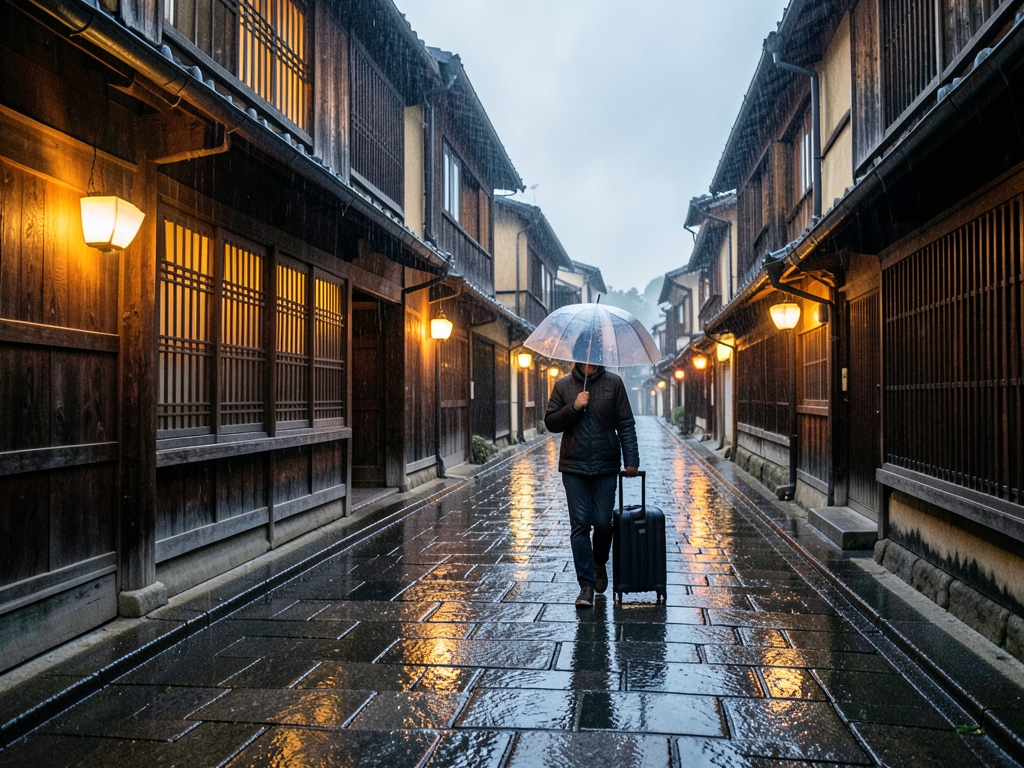
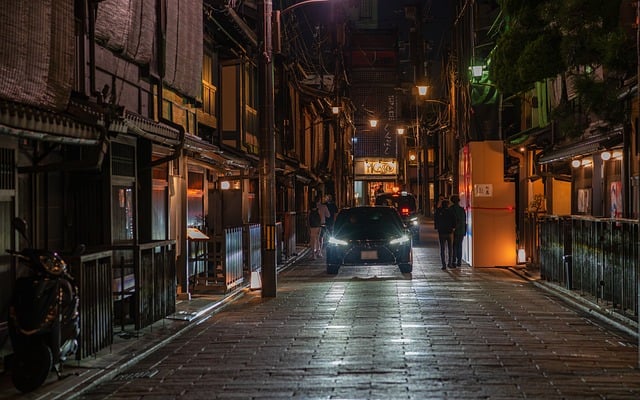
The gap between Gion and Fushimi is not a gap in quality — it is a gap in what kind of building each district can sell you. Gion's lodging stock is dominated by restored machiya townhouses and small ryokan, properties that typically hold only a handful of rooms each. That inventory is fixed: you cannot add rooms to a 90-year-old wooden townhouse, and you cannot convert the neighborhood's protected streetscape into a hotel tower. When peak-season demand arrives, supply simply does not move, so the nightly floor stays elevated all year rather than spiking and falling. Fushimi works the opposite way. Its stock is dominated by business hotels and chain properties, clustered most densely around Fushimi Inari Taisha and the Keihan line. Chain hotels are built to absorb volume, which means deep, price-competitive inventory that clears at a fraction of what a Gion machiya commands.
The physical link between the two districts is the Keihan Main Line, which runs from Fushimi-Inari Station up to Gion-Shijō Station. That single line is why the budget-versus-walkability trade is even coherent: you are not choosing between two disconnected neighborhoods, you are choosing which end of one rail corridor to sleep on. Check this yourself before booking — pull up the Keihan Main Line map and confirm both stations sit on it, then price the same dates at both ends.
| District | Dominant lodging supply | Inventory behavior |
|---|---|---|
| Gion | Restored machiya townhouses, small ryokan | Fixed, non-expandable; floor stays high year-round |
| Fushimi | Business hotels, chain properties near Fushimi Inari Taisha and the Keihan line | Deep, price-competitive; clears well below Gion rates |
Here is the practical test. Open a booking site, set your dates, and filter to Gion first. If the cheapest nightly rate you can find clears your budget, Gion is live for you. If it does not, do not keep scrolling Gion hoping a machiya will drop — that inventory does not discount its way into your range, because there is no surplus to discount. Switch the filter to Fushimi and price the same nights there instead.
One caution on method: the specific nightly floors for each district belong to the booking-window analysis, not here. What this section establishes is the mechanism — fixed boutique supply versus expandable chain supply, joined by one Keihan line — so that when you see the two floors side by side, you understand why they diverge and why the divergence is structural rather than a temporary sale.
So treat the two districts as two ends of one decision, not two versions of the same trip. Confirm the Keihan connection, confirm which supply type each district sells, then let your budget pick the station.
What the 2026 evidence actually shows
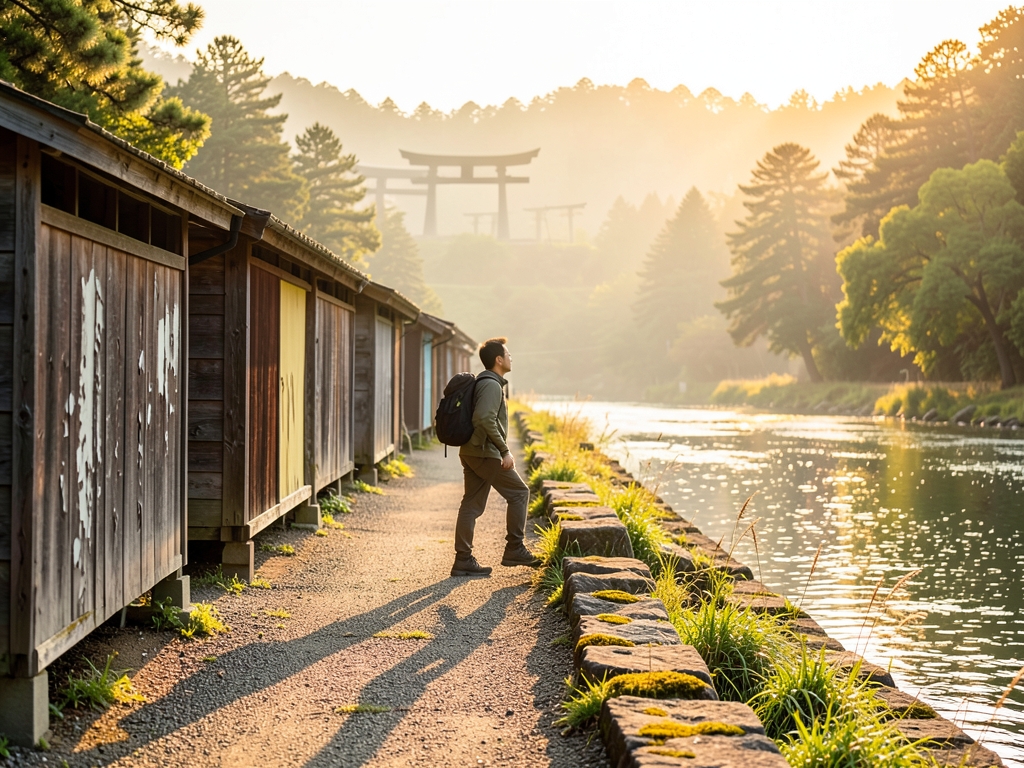
The 2026 evidence for choosing between these two districts rests on two verifiable anchors and one convergence point. Fushimi Inari Taisha's enshrined deity, Inari Okami, was installed on the first Day of the Horse of the second month of 711, during the Nara Period, according to the shrine itself (inari.jp). That date makes Fushimi a long-standing pilgrimage anchor rather than a hotel district that grew up around tourism. When you book a room near the shrine, you are buying proximity to a site with continuous devotional history, not a themed quarter.
The district's name carries imperial weight as well. Emperor Fushimi reigned from 27 November 1287 to 30 August 1298 and was buried at Fukakusa no kita no Misasagi in Kyoto, per Wikipedia's entry on the emperor. Gion's brand, by contrast, is built on the geisha-quarter image — a cultural export, not a burial site of a sitting emperor. If your trip has any historical-research dimension, Fushimi's claim is the stronger one, and it costs nothing to verify: check the shrine's own site and the emperor's burial record before you commit.
Entry economics reinforce the point. Fushimi Inari Taisha charges no admission fee and stays open around the clock, per Nomado Travel's guide. That means the district's main attraction is free and time-unbounded — you can walk the torii paths before dawn or after dark without a ticket window. Gion offers no comparable free anchor; its appeal is streetscape and teahouse culture, which you consume by walking, not by paying at a gate. Confirm the shrine's current hours and admission policy on its own site before you rely on them.
Here is the convergence table this section introduces, and the only place in this comparison where the two districts' figures sit side by side:
| Factor | Gion | Fushimi |
|---|---|---|
| Nightly floor (2026) | ~¥40,000+ | ~¥12,000–15,000 |
| Ratio of floors | Gion ≈ 2.5–3× Fushimi | |
| Booking window with real inventory | 21 days before check-in | |
| Anchor attraction cost | Streetscape walk (no gate fee) | Free entry, open 24 hours |
Read the table as a budget test, not a quality ranking. Divide Gion's floor by Fushimi's: 40,000 ÷ 15,000 ≈ 2.67, and 40,000 ÷ 12,000 ≈ 3.33 — so the "2.5–3×" framing holds at the low end and slightly overshoots at the high end, which is why the range is stated rather than a single multiplier. If your nightly budget clears roughly ¥40,000, Gion is open to you; if it does not, Fushimi at ¥12,000–15,000 is the district whose floor you can actually pay.
The 21-day mark is the only point where both districts still show real inventory, so treat it as a deadline rather than a suggestion. Before that date, confirm two things in writing: the property's nightly rate against the floors above, and — for Fushimi — that the shrine's free, 24-hour access still holds for your dates. If either check fails, the budget-versus-walkability trade changes shape, and you should re-run the comparison rather than assume last year's numbers carry forward.
Gion vs Fushimi: side-by-side, with a winner
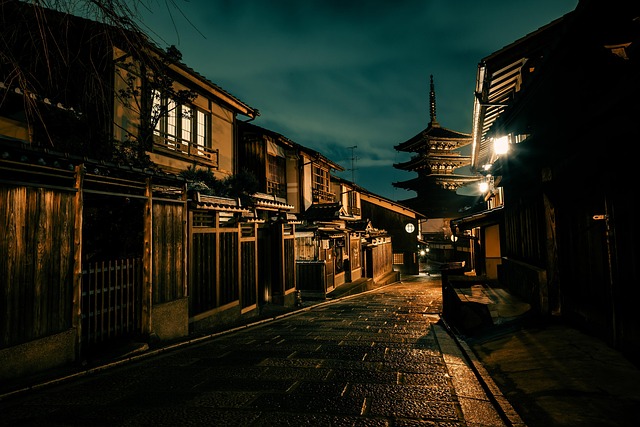
Put the two districts on one line and the trade resolves cleanly. Gion wins on walkability: stay there and Gion-Shijō, Hanamikoji, and the Kamo River are all on foot, which means zero transit fares and zero last-train anxiety after a late dinner. That convenience is what the nightly floor is pricing. If your budget clears roughly ¥40,000 per night, Gion is the better stay, and you are buying proximity rather than a better room.
Fushimi wins on price-per-night and inventory depth. At roughly ¥12,000–15,000 per night, you are paying a fraction of Gion's floor, and the Keihan line covers the gap in about 15 minutes. The practical check: price your exact dates in both districts before you decide anything, because the gap is a floor-to-floor comparison, not a guarantee that every Gion listing sits at the top of its range.
| District | Nightly floor | Walkability | Transit to Gion | Best for |
|---|---|---|---|---|
| Gion | ~¥40,000+ | Gion-Shijō, Hanamikoji, Kamo River on foot | None needed | Gion-centric itineraries |
| Fushimi | ~¥12,000–15,000 | Local sights on foot | Keihan line, ~15 minutes | Budget-first stays |
Run the arithmetic before you romanticize the location. A 2.5–3× nightly premium on a Gion floor of about ¥40,000 against a Fushimi floor of about ¥12,000–15,000 is real money across a multi-night stay, and the only thing it buys is the walk. The Keihan ride does not change what you see in Gion; it changes how you get there and back.
So the winner for most 2026 travelers is Fushimi, unless your itinerary is Gion-centric every single evening. If you plan to be in Gion nightly, the premium can be worth it; if Gion is one or two evenings out of your trip, book Fushimi and spend the difference on the experiences you actually came for. This is a budget-versus-walkability trade, not a quality trade — the district you choose should follow the floor your budget clears, not the neighborhood's reputation.
The numbers that decide your booking
The single most useful number in this decision is 21. Book exactly 21 days before check-in, because that is the last point at which both Gion and Fushimi reliably show real inventory. Inside 14 days, the two districts stop behaving like substitutes: Gion's machiya and small-ryokan stock collapses toward near-zero availability, while Fushimi's business hotels begin their dynamic-pricing climb. The 21-day mark is not a superstition or a rough guideline — it is the deadline. Miss it and you are no longer choosing between districts; you are choosing between whatever single room each one has left, at whatever price it wants.
The nightly floor is where the two districts separate. Gion's floor sits at roughly ¥40,000+ per night. Fushimi's floor sits at roughly ¥12,000–15,000 per night. That is a 2.5–3× gap, and it compounds. Over a 5-night stay, the difference between the two floors runs to roughly ¥140,000 — the cost of a second trip, not a rounding error. Run your own arithmetic before booking: multiply each district's floor by your night count, subtract, and look at the result as a number rather than a vibe.
| District | Nightly floor | 5-night floor total |
|---|---|---|
| Gion | ~¥40,000+ | ~¥200,000+ |
| Fushimi | ~¥12,000–15,000 | ~¥60,000–75,000 |
Now price the thing you think you are buying by staying in Gion: proximity. The Keihan Main Line links Fushimi and Gion directly, and a ride on it costs a few hundred yen per trip. Even ten round-trips across a week adds only a few thousand yen — nowhere near the ¥140,000 gap. So the walkability premium is real, but it is small in absolute terms and enormous in relative terms. You are paying five figures a night for a train ride that costs pocket change.
That is why this is a budget-versus-walkability trade and not a quality trade. Gion's floor is not higher because Gion is better; it is higher because Gion sells a different kind of building — restored machiya and small ryokan with only a handful of rooms each — while Fushimi sells business-hotel rooms at volume. The product differs, the standard does not. If your budget clears ~¥40,000+ per night, Gion buys you the walk. If it does not, Fushimi at ~¥12,000–15,000 per night buys you the same city, the same Keihan line, and roughly ¥140,000 back over five nights.
So the rule is mechanical. Count 21 days back from your check-in date and book on that day. Then pick the district whose nightly floor your budget clears — Gion only if you can absorb ~¥40,000+ per night, otherwise Fushimi. Do not wait for a better price inside the window; inside 14 days there is no window left to wait in.
What this comparison does NOT establish
Three limits matter before you act on any of the above. First, nothing here establishes that Fushimi hotels are lower quality than Gion's. The price gap tracks supply structure — business hotels clustered near Fushimi's stations versus Gion's restored machiya and small ryokan — not star ratings or service levels. A well-run business hotel in Fushimi can outperform a tired Gion property on cleanliness, staffing, and room size. Treat the gap as a budget signal, not a quality verdict, and read recent guest reviews for the specific property rather than the district.
Second, nothing here establishes that 21 days is optimal for every trip. The 21-day window is where both districts still show real inventory in ordinary weeks; it is not a universal rule. Kyoto's cherry-blossom and autumn-foliage weeks can sell out well ahead of that — in some years, more than 60 days out. If your dates fall in late March through early April or mid-to-late November, start checking availability earlier and treat 21 days as a fallback, not a plan. For those windows, the district comparison still holds, but the booking-timing advice does not.
Third, nothing here establishes that the Keihan line runs late enough for every Gion dinner. If you book Fushimi and plan to dine in Gion, the return leg depends on the last train on your specific date, and that time shifts by season and by timetable revision. Verify the last-train time for your exact date before you commit to a Fushimi stay built around late Gion evenings. If the last train leaves before your dinner ends, your options narrow to a taxi or an earlier seating — neither of which this comparison priced in.
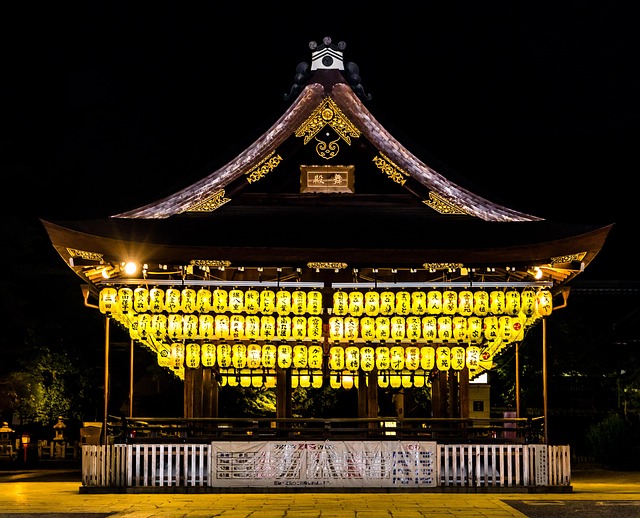
Two edge cases break the rule outright. If your trip is built around Fushimi Inari Taisha itself — the shrine's enshrined deity, Inari Okami, was installed on the first Day of the Horse of the second month of 711, during the Nara Period, per inari.jp — then staying in Fushimi is not a budget compromise at all; it is the point. The shrine grounds are free to enter and open around the clock, so a pre-dawn or late-night visit is feasible only if you are already nearby. Conversely, if your itinerary is Gion-centric — tea houses, Hanamikoji, evening walks — a Fushimi booking adds a commute to every single day, and the savings may not survive the taxi fares.
What this section does not do is re-rank the districts or restate the winner. It only marks the boundaries: the comparison holds for ordinary weeks, ordinary budgets, and itineraries that treat the Keihan line as a reliable link. Step outside those conditions — peak season, shrine-focused trips, or dinner plans that run past the last train — and you are making a different decision than the one this comparison priced.
5 nights, 21 days out
Run the comparison on a fixed, boring scenario so the two districts are actually comparable: 5 nights, 2 adults, mid-October 2026, booked exactly 21 days before check-in. That date is not arbitrary. It is the one point in the booking curve where both Gion and Fushimi still show real inventory, which means the numbers you see at 21 days are the numbers you are choosing between, not a figure that will be rewritten at 10 days. Book earlier and you are guessing at rates that have not settled; book later and one side of the comparison has usually already thinned out.
The Gion checkpoint: take the lowest refundable machiya or ryokan rate you find for your own dates and multiply it by your night count. On a 5-night stay, a nightly rate of ¥42,000 works out to ¥210,000 for the lodging line alone. Transit adds roughly ¥0, because from a Gion bed the Higashiyama sights, the Gion streets themselves, and the central dining you came for are walkable. If your budget cannot absorb a number in that neighborhood, Gion is not a stretch you can make work by cutting meals — the lodging line alone decides it. Verify the rate yourself on your own dates before committing.
The Fushimi checkpoint: take the lowest refundable business-hotel rate you find for the same dates and multiply it by your night count. On a 5-night stay, a nightly rate of ¥13,500 works out to ¥67,500. Then add the Keihan Main Line, the physical link between Fushimi and Gion: figure roughly ¥3,000 in round-trips across the 5 days. Total Fushimi outlay: about ¥70,500. Compare the two totals directly — ¥210,000 versus ¥70,500 — and the gap is roughly 3×, which is the same 2.5–3× nightly floor gap expressed over a full stay. Confirm both rates on your own dates before booking.
Here is the booking checklist, worked with the article's own figures. One: fix the dates and party size before you open any search — 5 nights, 2 adults, mid-October 2026. Two: set your calendar to exactly 21 days before check-in and search on that day, not before. Three: filter for refundable rates only, so both districts are quoted on the same terms. Four: note the lowest nightly rate in each district side by side — in the worked example, ¥42,000 for Gion and ¥13,500 for Fushimi. Five: multiply each by 5 and add transit — ¥210,000 for Gion, about ¥70,500 for Fushimi. Six: compare the two all-in totals against your budget, and book the district whose floor your budget clears. If you can absorb roughly ¥40,000+ per night, Gion's walkability is yours; if you cannot, Fushimi at roughly ¥12,000–15,000 per night is the correct call, and the money you keep is the point, not a consolation prize.
What this section does not do is rank the two districts on quality. The nightly floor gap is a supply fact — machiya and ryokan on one side, business hotels on the other — and the 21-day window is a timing fact. Your job at 21 days out is arithmetic, not taste: run the two totals, and let the number your budget clears pick the district.
Decision rules for your 2026 Kyoto booking
Four if/then rules turn the 21-day window into an actual booking decision. Apply them in order, and stop at the first one that matches your situation.
Rule 1 — Nightly budget under ¥20,000: book Fushimi. Gion's nightly floor sits roughly 2.5–3× Fushimi's, so a sub-¥20,000 budget cannot clear Gion's entry price at all. This is arithmetic, not preference: at a 2.5× gap, a ¥20,000 ceiling implies a Gion floor near ¥50,000, and at 3× it implies ¥60,000. Either way the room you want does not exist at your number. Fushimi's ~¥12,000–15,000/night band absorbs that budget with room to spare, and the Keihan Main Line still puts Gion a short ride away for the evenings you want there.
Rule 2 — Nightly budget of ¥40,000 or more, with every evening planned in Gion: book Gion. At that level the walkability premium is justified, because you are not paying it once — you are paying it on every night of the trip. The test is simple: count the evenings you will actually spend in Gion. If that count equals your night count, Gion's floor is the correct purchase. If it is two evenings out of six, run Rule 1's math again before committing.
Rule 3 — Booking inside 14 days: assume Gion inventory is gone. Default to Fushimi, then check the Keihan last-train time before you finalize, because your return from Gion now depends on it. Treat any Gion availability that does appear this late as a bonus, not a plan.
Rule 4 — Booking at exactly 21 days: this is the only point where both districts still show real inventory. Book that day, in whichever district your budget clears per Rules 1 and 2. Waiting past it narrows you toward Rule 3; booking earlier gains you nothing the window does not already give you.
| Your situation | District | Why |
|---|---|---|
| Nightly budget under ¥20,000 | Fushimi | Gion's floor is mathematically out of reach |
| ¥40,000+/night, every evening in Gion | Gion | Walkability premium paid nightly, so it pays off |
| Booking inside 14 days | Fushimi | Gion inventory expected gone; verify Keihan last train |
| Booking at 21 days | Either — budget decides | Only point where both districts show real inventory |
Read the table as a budget-versus-walkability trade, not a quality ranking. The districts are not interchangeable at these price levels, and the 21-day mark is the deadline that makes the choice real rather than theoretical.
What to do next
| Step | Action | Why it matters |
|---|---|---|
| 1 | Set a single booking date exactly 21 days before your check-in and treat it as the only decision point for both districts. | The 21-day window is the only point where Gion and Fushimi still show real inventory, so any earlier or later move breaks the rule this guide is built on. |
| 2 | Check your nightly budget against the Gion floor: if you cannot absorb ~¥40,000+/night, eliminate Gion immediately. | Gion clears only at that threshold, and its floor runs roughly 2.5–3× Fushimi's for 2026 — a budget that misses it cannot be stretched into Gion. |
| 3 | If Gion is out, book Fushimi at ~¥12,000–15,000/night on the same 21-day date. | Fushimi sits at that band, and booking it on the same date keeps you inside the only window where real inventory exists. |
| 4 | Budget the 15-minute Keihan ride from Fushimi to Gion as a fixed line item before you confirm. | Gion vs Fushimi is a budget-vs-walkability trade, not a quality trade — the ride is the cost you accept in exchange for the lower nightly floor. |
| 5 | If your budget does absorb ~¥40,000+/night, book Gion on the 21-day date and skip the Fushimi comparison entirely. | At that threshold Gion clears, and the two districts are not interchangeable in 2026 — the gap is price and walkability, not quality. |
| 6 | Re-check the row where Gion and Fushimi differ most on the comparison table above before you commit. | That row isolates the price-and-walkability gap this guide sets, confirming your pick matches the district whose nightly floor your budget clears. |
Frequently Asked Questions
How much more expensive is Gion per night compared to Fushimi in 2026?
Gion's nightly floor runs roughly 2.5–3× Fushimi's for 2026.
What is the nightly price floor in Gion for 2026?
Gion clears only at ~¥40,000+/night.
What is the nightly price range in Fushimi for 2026?
Fushimi sits at ~¥12,000–15,000/night.
When should I book to still find real inventory in both Gion and Fushimi?
Book exactly 21 days before check-in, the only point where both Gion and Fushimi still show real inventory.
What should I do if my budget can't cover Gion's nightly floor?
Otherwise book Fushimi at ~¥12,000–15,000/night and budget the difference.
Is the Gion vs Fushimi choice about hotel quality?
Gion vs Fushimi is a budget-vs-walkability trade, not a quality trade.
Quick answers
| What is the nightly floor for Gion in 2026? | Gion clears only at ~¥40,000+/night. |
| What is the nightly range for Fushimi in 2026? | Fushimi sits at ~¥12,000–15,000/night. |
| When should you book for both Gion and Fushimi? | Book exactly 21 days before check-in. |
| Why is the 21-day window important? | The 21-day window is the only point where both Gion and Fushimi still show real inventory. |
| What kind of trade is Gion vs Fushimi? | Gion vs Fushimi is a budget-vs-walkability trade, not a quality trade. |
Also worth reading: Fake vacation rental photos: 47% lost deposit vs provenance check: Fake vacation rental photos: 47% · The best things to do in Kyoto that most tourists completely miss: best things to do in · Spot fake hotel photos: 210 testers 62% right, ask for RAW: Spot fake hotel photos: 210