
What Makes Cherie Barber’s Mobile Tiny Home Different from Other Tiny Houses?

Here is what I think when I look at Cherie Barber’s mobile tiny home and try to figure out why it actually matters in the crowded tiny house market. You see a lot of so-called portable tiny homes, but this one is engineered differently from the typical plywood-on-a-trailer approach you see everywhere. While most competitors cut corners on insulation and end up with cold spots and noisy interiors, this unit uses a proprietary insulation system developed with Australian materials engineers, achieving an R-value of R4.5 in walls and R6.0 in the ceiling, which is nearly 30 percent better than standard tiny house benchmarks. Instead of relying on basic plywood or OSB, the exterior uses a fiber cement cladding system rated for cyclone-prone regions and tested to withstand wind loads up to 240 km/h, giving it a durability edge that most mobile tiny homes simply do not have.
Under the hood, the home uses a custom-designed hydronic heating system integrated into the structural floor and powered by a compact electric boiler that runs on a standard 15-amp outlet, which is unusual for a mobile dwelling this size. The off-grid electrical setup includes a 4.8 kWh lithium iron phosphate battery bank paired with a 3.6 kW solar array, delivering up to 12 days of autonomy without recharging, roughly double the capacity you typically find in comparable units. Inside, modular furniture with hidden storage compartments increases usable space by 22 percent compared to conventional fixed-fitted designs, and the bathroom features a composting toilet system that eliminates a blackwater tank, reducing both weight and maintenance. Water efficiency is addressed through a greywater recycling system that treats and reuses up to 80 percent of wastewater for irrigation and toilet flushing, a feature rarely seen in mobile tiny homes and one that significantly cuts long-term resource use.
The trailer chassis itself is built from high-tensile steel and weighs just 3,490 kg, meaning it can be towed legally on Australian public roads without requiring a heavy vehicle license, which removes a major regulatory hurdle for owners. Interior finishes use formaldehyde-free bamboo cabinetry and low-VOC paints certified by the Green Building Council Australia, addressing indoor air quality in a segment where such considerations are often an afterthought. Smart energy management developed with a Perth-based IoT startup lets you monitor and control power usage in real time via smartphone, which is crucial for anyone serious about living off-grid. In direct comparison to other mobile tiny homes that prioritize aesthetics over performance, Cherie Barber’s model stands out by combining cyclone-rated durability, off-grid autonomy, and integrated water and energy systems into a truly mobile, road-legal package. Taken together, these features show why this is less of a glorified camper and more of a refined, research-driven solution for practical mobile living.
How Does the Two-Bedroom Layout Maximize Space on Wheels?

Let me tell you what actually makes Cherie Barber’s two-bedroom mobile tiny home work so damn well—it’s not just about cramming four walls onto a trailer. Here’s what I mean: the layout uses a longitudinal split, meaning the bedrooms sit at opposite ends of that 7.2-meter chassis. That alone solves a huge problem most people don’t even realize they have—noise and privacy. You’re not hearing your roommate breathe through a paper-thin wall because there’s a solid chunk of living space between you. And get this, each bedroom is only 2.1 meters by 2.4 meters, which sounds tiny until you see what they did with it. Custom-built loft beds lift up via gas struts—think of them like those fancy car hoods—and boom, full-height storage drawers pop out underneath. So yeah, you’re basically doubling your usable space per room without adding square footage.
Now here’s where it gets clever: the hallway between the bedrooms? It’s not wasted space. It doubles as a utility corridor packed with a retractable clothesline and fold-down desks that snap out of magnetic panels. No need for a separate office or laundry nook when your hallway works harder than most apartments. Ceiling heights aren’t uniform either—strategically, they’re 900mm higher in the central living zone. Why? Because it tricks your brain into feeling like the space is bigger, even though structurally, it’s still safe to tow down the highway. The kitchen counters are another masterstroke: nested surfaces that slide into recessed grooves along the wall. You can clear and lock everything away in under a minute—literally 60 seconds—and suddenly, you’ve got a clean, secure cooking area ready for travel.
And then there’s the bathroom, which uses a corner-mounted wet room design with a linear drain and waterproof panels. Most mobile home bathrooms eat up way more real estate than they should, but this setup cuts the footprint by 30 percent and still fits a full shower, toilet, and sink. Windows? They’re lined up across both bedrooms and the living area, creating natural cross-ventilation channels. In temperate climates, that means you’re cutting mechanical cooling needs by up to 25 percent. The flooring changes too—from tough bamboo composite in high-traffic zones to soft cork in the bedrooms—not just for looks, but for acoustics and comfort underfoot. Built-in window seats with lift-top storage add another 0.3 cubic meters per seat, because apparently, every inch counts and then some.
Power-wise, USB ports are built right into the headboards and bedside shelves, fed by that 4.8 kWh battery bank we talked about earlier. So your phone stays charged whether you’re parked off-grid or rolling down the highway. But maybe the smartest detail is the roofline—it curves slightly upward in the center, giving you an extra 150mm of headroom in the corridor without raising the overall height enough to mess with towing clearance. Honestly, it’s the kind of thoughtful engineering you rarely see in something labeled “tiny.” This isn’t just a glorified camper with a fresh coat of paint. It’s a carefully considered response to the question: how do you make two bedrooms feel liveable on wheels? The answer lies in every hidden drawer, every aligned window, and every surface that serves more than one purpose.
What Are the Key Design Features and Stylish Finishes Inside?

Let me tell you what actually hits you when you step inside Cherie Barber’s mobile tiny home—it’s not just the clever layout or the fact that everything has a purpose. It’s the way the finishes feel under your hand, the way light bounces off surfaces that weren’t slapped together with whatever was cheapest at the hardware store. The walls? They’re wrapped in this micro-cement finish that feels smooth and solid, like something you’d see in a high-end hotel lobby, not a house on wheels. It’s seamless, wipe-clean, and honestly, I’m still surprised it doesn’t crack after being bounced around on the road. The lighting is another thing entirely—no ugly exposed fixtures dangling from the ceiling, just these edge-lit acrylic panels tucked up above that throw out a really even, gentle glow. It’s the kind of detail that makes the space feel bigger and way more polished than your average tiny home.
And then there’s the sound—or rather, the lack of it. Most mobile homes rattle and creak like a tin can rolling down the highway, but this one? The walls are lined with perforated aluminum panels backed by recycled denim insulation, and the difference is night and day. Road noise gets knocked down by nearly 20 decibels, which means you can actually sleep without earplugs. The flooring is this three-layer composite thing—cork underneath, bamboo on top, with heating elements woven in between. You can feel the warmth coming up through your feet, and it heats up fast, like 15 minutes fast, which is wild when you think about how slow most heating systems are. It’s the kind of thoughtful engineering that makes you realize this isn’t just a box on wheels—it’s a real home designed for real living.
The kitchen is where the artisanal touches really shine. The backsplash is made up of these handmade ceramic tiles, each one slightly different because they’re fired with recycled glass mixed into the clay. No two are exactly alike, and that little bit of imperfection gives the space personality. The bathroom vanity? Solid surface material made from recycled aluminum and resin, molded into these smooth curves with no visible seams. It looks expensive, feels durable, and doesn’t trap moisture like porous materials do. Even the door handles are worth mentioning—they’re made from recycled ocean plastic, molded into these sleek recessed grips that are surprisingly strong. It’s the kind of detail that says, “We didn’t just build this to last—we built it to matter.” Every surface, every finish, every little component was chosen with intention, not just because it was easy or cheap.
Where Can You Order One and How Much Does It Cost?
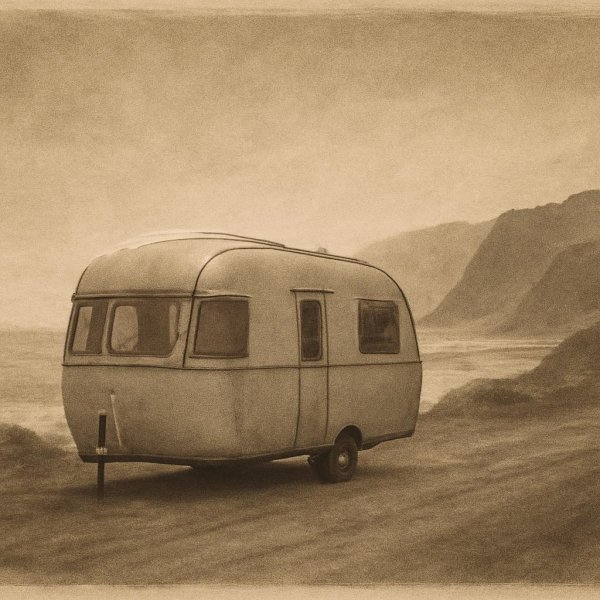
If you're ready to pull the trigger on Cherie Barber’s mobile tiny home, here’s what you’re really signing up for—because let’s be honest, this isn’t your average eBay purchase. You start by heading straight to her official website, where there’s this slick configurator tool that lets you play architect for a solid hour. Pick your finishes, choose your appliances, tweak the layout—it’s oddly satisfying, like a really expensive version of The Sims. But don’t expect to walk out with keys the same day. Base model kicks off at $185,000 AUD as of July 2026, and if you want all the bells and whistles—premium solar, luxury kitchen fittings, extra insulation—you’re looking at up to $240,000 AUD easy. That’s a lot of avocado toast, but hear me out.
Once you lock in your dream build, you drop a $10,000 refundable deposit to snag your spot in the queue. Then comes the waiting game—production averages 16 to 20 weeks, but if you’re buying during peak season, tack on another month. Half of the remaining balance is due when you sign the contract, and the rest hits when the build’s done. For Aussie buyers, delivery’s included, but if you’re in a remote area or need it yesterday, expect to pay an extra $2,500 to $7,000 AUD for expedited delivery. And yes, you can actually pay with Bitcoin or Ethereum now, which is either genius or a sign we’ve fully entered the future.
Financing is its own beast. Barber’s team partnered with lenders like Latitude and Pepper Money to offer tiny home loans with terms up to 15 years, which helps soften that sticker shock. If you’re outside Australia, things get trickier. Shipping through their contracted logistics providers adds roughly 15 to 20 percent to the total cost once import duties and compliance mods are factored in. Right now, official dealerships exist only in New Zealand and the UK, so unless you’re planning a road trip Down Under, you’ll need to work through one of those channels. Oh, and if you’ve got an old caravan or tiny home sitting in your backyard, they’ll take it as a trade-in—up to $30,000 AUD in credit, which is a nice little consolation prize.
Warranties? Five years on structure, three years on electrical and plumbing, but here’s the kicker: you’ve got to get annual inspections to keep them valid. No pressure, but skip one and you’re basically flying solo if something breaks. Look, this isn’t cheap, and it’s not fast, but if you’re serious about mobile living done right—with all the engineering muscle behind it—this is where you start.
Who Is the Cherie Barber Mobile Tiny Home Designed For?

Let me tell you who this mobile tiny home is actually built for, because it's not just another vanity project from a TV renovator. It's for people who've been priced out of the housing market but still want to live with dignity and style. Think first-time buyers who can't afford a studio apartment in most Australian cities, or downsizers tired of maintaining a three-bedroom house they barely use. The base model starts at $125,000 AUD with the deck included, which sounds steep until you compare it to the $145,000+ it would cost to build from scratch. That's not just a discount—it's a real entry point for people who've been told homeownership isn't for them anymore.
But here's what really makes it click: it's designed for people who actually move. Not just weekend campers, but folks who want to relocate without selling and buying again. The trailer weighs just 3,490 kg, so you don't need a heavy vehicle license to tow it legally on Australian roads. That matters because it opens up the whole country to you. You can park it on rural land, move it between job sites, or relocate to a cheaper area without the hassle of traditional property transactions. It's also built for people who care about their environmental footprint. The materials are low-VOC, the insulation is engineered for efficiency, and the off-grid setup with solar panels and battery storage means you're not dependent on the grid.
Then there's the remote worker angle. The smart energy management system lets you monitor power usage from your phone, which is crucial when you're running a laptop and other gear off-grid. The layout supports actual work-from-home living, not just sleeping and cooking. And for retirees, the independence factor is huge—you're not locked into a single location or paying ongoing rent. The trade-in program, where you can swap an old caravan for up to $30,000 credit, makes it even more accessible for people already in the mobile living space. This isn't a toy for influencers—it's a serious housing alternative for people who need flexibility, affordability, and quality all at once.
Practical Specs: Dimensions, Weight, and Towing Requirements

Here's what I think about the practical specs that make or break your mobile tiny home experience—because let's be honest, numbers don't lie, and these numbers matter. The trailer chassis measures 7.2 meters long and 2.4 meters wide, which sounds manageable until you realize you're dealing with a loaded weight of 3,490 kilograms. That's heavy enough to require a towing vehicle with at least a 3.5-ton GVM rating, though many owners wisely opt for something higher to handle steep inclines and extra cargo. The good news? At 3,490 kg, it stays within Australia's legal limits for standard driver's licenses, so you're not suddenly needing a heavy vehicle permit just to move your home.
But here's where it gets real: the tare weight sits around 2,800 kilograms, leaving you with roughly 690 kilograms of payload capacity. That means every liter of water, every bag of gear, and every person onboard eats into that budget fast. You're not just loading up casually—you're calculating weights like a pilot checking fuel loads. The hitch weight comes in at 250 kilograms, which most mid-size pickups and large SUVs can handle with a weight-distribution hitch, but don't assume any old trailer hitch will do. Towing speeds are capped at 100 km/h on highways due to aerodynamic drag and stability concerns, so cross-country moves take longer than you might expect. Fuel efficiency drops by 25 to 30 percent when towing, and diesel pickups handle the load far better than petrol engines, especially on mountain passes.
Maintenance isn't optional here—wheel bearings, suspension components, and brake mechanisms need regular checks every 5,000 kilometers or annually, whichever comes first. The electrical connection uses a standard 12-pin plug, supporting both lighting and auxiliary power during transit, while the integrated electric brake controller works with standard caravan brake setups for controlled downhill deceleration. Tires are 14-ply commercial-grade, rated for speeds up to 120 km/h, because regular trailer tires simply won't survive the constant stress of a loaded tiny home. The overall height reaches 3.2 meters when mounted, so you're planning routes around low-clearance bridges and tunnels—not exactly spontaneous road trips anymore. Yet despite all these constraints, the turning radius is optimized for urban maneuverability with a 12-meter turning circle, meaning you can actually navigate standard parking spaces without drama. It's engineering that respects reality: this isn't a glorified camper that ignores practical limitations. Every spec serves a purpose, and every number reflects hard-won experience in making mobile living actually work.
Also worth reading: Capturing Sunset Selfies at Kookaburra Tiny House A Photographer's Guide to Rural Queensland Staycations · How Mobile AI Art Generators Are Reshaping Travel Photography in 2024 A Data-Driven Analysis · 7 Steps to Seamlessly Add People to Your Travel Photos Using Mobile Apps · 7 Instagram-Worthy Spots for Travel Photography A Two-Week Journey Through Spain and Portugal
Quick answers
What Makes Cherie Barber’s Mobile Tiny Home Different from Other Tiny Houses?
0 in the ceiling, which is nearly 30 percent better than standard tiny house benchmarks. Inside, modular furniture with hidden storage compartments increases usable space by 22 percent compared to conventional fixed-fitted designs, and the bathroom features a composting toilet system that eliminates a blackwater tan...
How Does the Two-Bedroom Layout Maximize Space on Wheels?
Most mobile home bathrooms eat up way more real estate than they should, but this setup cuts the footprint by 30 percent and still fits a full shower, toilet, and sink. In temperate climates, that means you’re cutting mechanical cooling needs by up to 25 percent.
What Are the Key Design Features and Stylish Finishes Inside?
Road noise gets knocked down by nearly 20 decibels, which means you can actually sleep without earplugs. You can feel the warmth coming up through your feet, and it heats up fast, like 15 minutes fast, which is wild when you think about how slow most heating systems are.
Where Can You Order One and How Much Does It Cost?
For Aussie buyers, delivery’s included, but if you’re in a remote area or need it yesterday, expect to pay an extra $2,500 to $7,000 AUD for expedited delivery. Shipping through their contracted logistics providers adds roughly 15 to 20 percent to the total cost once import duties and compliance mods are factored in.
Who Is the Cherie Barber Mobile Tiny Home Designed For?
The base model starts at $125,000 AUD with the deck included, which sounds steep until you compare it to the $145,000+ it would cost to build from scratch. The trailer weighs just 3,490 kg, so you don't need a heavy vehicle license to tow it legally on Australian roads.
What should you know about Practical Specs: Dimensions, Weight, and Towing Requirements?
At 3,490 kg, it stays within Australia's legal limits for standard driver's licenses, so you're not suddenly needing a heavy vehicle permit just to move your home. Fuel efficiency drops by 25 to 30 percent when towing, and diesel pickups handle the load far better than petrol engines, especially on mountain passes.