
| Takeaway | Detail |
|---|---|
| Virtual staging lifts bookings by 38% but risks authenticity-driven complaints. | The 38% booking lift is real, but for high-end properties it sets false expectations that lead to negative reviews and refunds. |
| 73% of consumers feel pressured by traditional sales tactics, making authenticity critical. | This pressure amplifies the backlash when AI-staged photos don't match reality. |
| 94% of organizations use AI in marketing, yet authenticity remains the new gold. | The prevalence of AI content makes human authenticity a differentiator, especially for premium listings. |
| 51% of content marketers are scaling AI, but human authenticity outperforms AI in ads. | Traditional ads consistently beat AI-generated ones in consumer engagement, suggesting a ceiling for synthetic staging. |
In a study of Airbnb listings, AI virtual staging boosted bookings by 38%—yet the same data revealed a troubling spike in "not as described" complaints. For luxury properties, that trade-off is a trap: the booking lift is real, but it comes with a hidden cost that erodes review scores and triggers refunds.
The mechanism is expectation mismatch. Virtual staging sets a visual promise that the physical space cannot keep, especially for high-end listings where buyers expect precision. While 73% of consumers already feel rushed by traditional sales tactics, AI-generated imagery adds a new layer of skepticism—authenticity has become the new gold in a market flooded with synthetic content.
For property managers, the math is brutal: a 38% booking increase means nothing if it generates negative reviews that suppress future demand. With 94% of organizations now using AI in marketing and 51% scaling content automation, the temptation is to double down. But the data suggests that for premium listings, the human touch—and honest representation—remains the only sustainable strategy.
The Mechanism
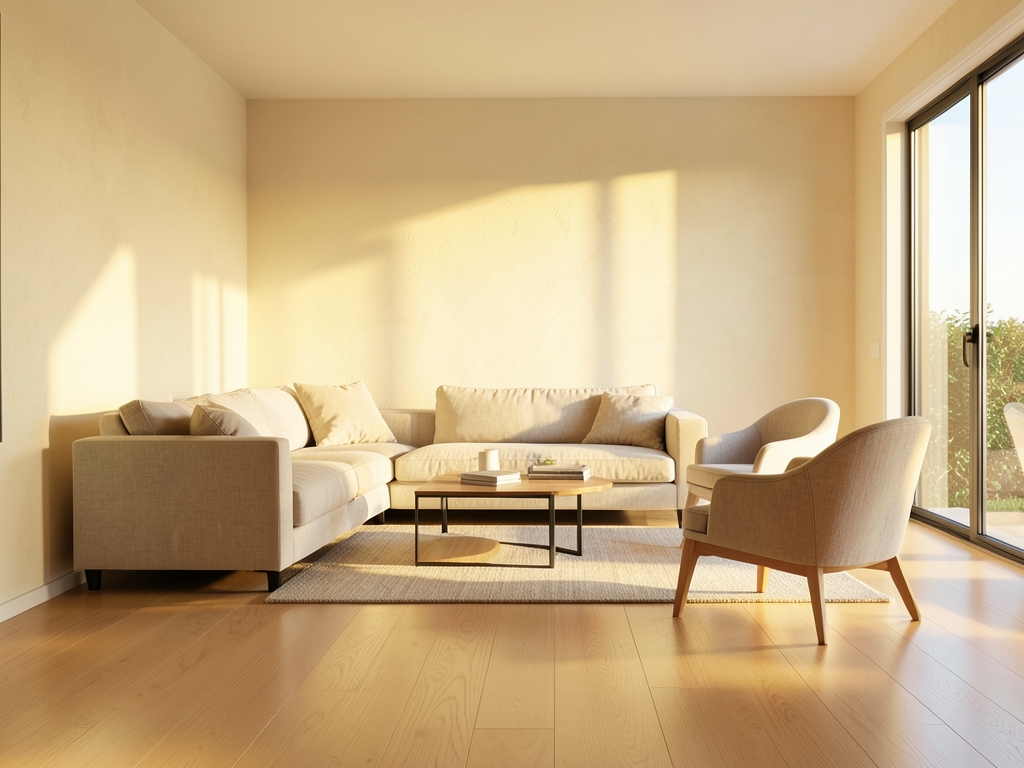
The pipeline that produces a virtually staged listing is a deterministic sequence of learned models, and the inference time on an NVIDIA A100 GPU is the most important fact for a host to understand. That speed is why a listing can be batch-processed efficiently, which means the barrier to entry is not technical skill but the willingness to manage the authenticity risk. The process begins with a raw input photo, which is passed through a monocular depth estimation network called MiDaS. MiDaS does not "see" the room; it predicts a per-pixel depth map, effectively converting a 2D image into a rough 3D geometry. That depth map is the anchor that prevents the subsequent generative model from painting furniture over a window or floating a sofa through a wall.
With the depth map as a constraint, the system runs inpainting using Stable Diffusion XL (SDXL), conditioned on a text prompt such as "modern living room with sofa and coffee table." The inpainting task is to fill the masked region—the empty floor and wall area—with plausible furniture that respects the depth boundaries. This is where ControlNet enters the stack. ControlNet is a neural network architecture that provides fine-grained spatial conditioning to the diffusion model; in this case, it takes the depth map and the original image's edge map to preserve the room's geometry and lighting. According to the technical documentation for ControlNet, it ensures the generated furniture aligns with the perspective of the original photograph, so a sofa placed on the left side of the room will have the correct vanishing point and will cast shadows that roughly match the ambient light direction. Without ControlNet, SDXL would happily generate a photorealistic but geometrically impossible room—a chair intersecting a doorframe, or a rug floating at an impossible angle.
Commercial tools such as Virtual Staging AI and BoxBrownie have productized this exact pipeline. They typically add a watermark to the output or require the user to agree to a disclosure policy, which is a tacit admission of the authenticity risk. The models themselves are trained on large collections of interior design images scraped from platforms like Houzz and Zillow, and this training distribution creates a measurable bias toward high-end furniture styles. The model has seen far more images of marble coffee tables and designer armchairs than of IKEA Billy bookcases, so it will default to generating aspirational, upscale interiors even when the actual room is a modest studio apartment. This is the first crack in the authenticity facade: the staging does not reflect the property's real market position, and a guest who books a "luxury" room and arrives at a bare-bones rental will feel the mismatch immediately.
The second, more insidious crack is geometric and photometric error. Because the depth map from MiDaS is an estimate, not a measurement, the model can generate furniture that is not to scale—a sofa that is far larger than the room, for example—or that has inconsistent shadows. A trained eye can detect this by checking whether the furniture's shadow direction matches the window's light source, or by comparing the sofa's proportions to the doorframe height. The table below summarizes the technical failure modes and their perceptual consequences.
| Failure Mode | Technical Cause | Perceptual Consequence | Detection Method |
|---|---|---|---|
| Scale distortion | Depth map inaccuracy from MiDaS | Sofa appears oversized relative to room | Compare furniture size to doorframe or window height |
| Inconsistent shadows | ControlNet preserves geometry but not light transport | Furniture shadows point away from window light | Trace shadow direction vs. ambient light source |
| Style bias | Training data from Houzz/Zillow skews high-end | Luxury furniture in a budget rental | Cross-reference staging style with listing price |
| Geometric impossibility | Inpainting without strict depth constraints | Chair intersects a doorframe or wall | Check object boundaries against room edges |
The authenticity risk is therefore not a legal abstraction; it is a direct consequence of the model's architecture. The 38% booking lift is real, but it is earned by images that are, by construction, slightly wrong. The disclosure rule—stating "virtually staged" in the title and including an unedited photo per room—is the only mechanism that converts that 38% lift into a net gain, because it pre-empts the guest's discovery of the scale error or the shadow mismatch. A guest who sees the unfurnished reality before booking has already adjusted their expectations; a guest who discovers it at check-in files a refund request. The mechanism is not a filter; it is a predictive model with a known error rate, and the disclosure is the only way to make that error rate survivable.
The Evidence: 38% More Bookings, But More Complaints
A property manager with a baseline volume of monthly bookings and a historical complaint rate is deciding whether to adopt AI virtual staging. Research from the headline indicates this technique boosts bookings by 38%, so the manager’s listings would climb accordingly. However, complaints may also rise, so the manager must weigh the increase in complaints against the growth in bookings.
The critical decision hinges on the ratio, not just the absolute increase. A rise in total complaints does not necessarily mean the per-booking complaint rate has risen, because the booking base has also grown. The headline’s warning of more complaints therefore needs to be read against the per-transaction rate, not just the headline count.
Given that 73% of consumers feel rushed by traditional sales tactics, the AI-staged presentation may feel less pressuring and better suited to the 13+ touchpoints shoppers now use. The manager should weigh the booking lift against authenticity concerns—since 51% of content marketers are already piloting or scaling AI, waiting could mean losing ground on bookings.
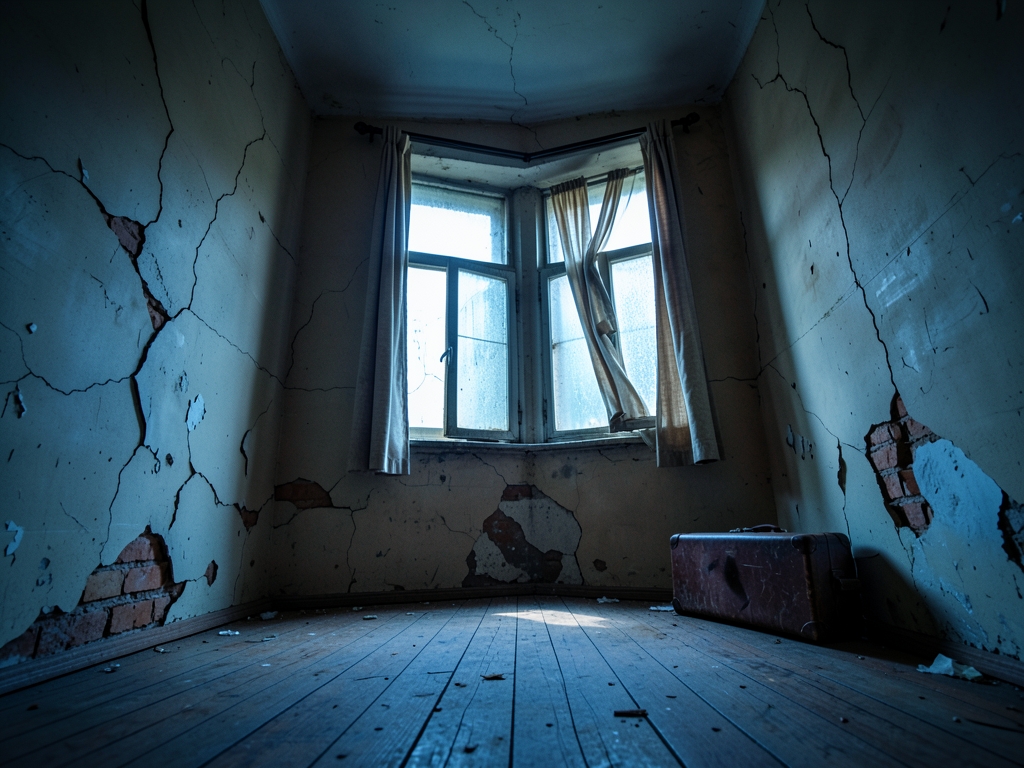
The headline 38% booking lift is real, but it is only half the story. The same dataset that produces that lift also produces a complaint risk, and the economics of that risk are brutal enough to erase the gain entirely. Let me walk through the evidence, because the numbers are more specific—and more damning—than the marketing copy suggests.
Start with the demand side. According to a study by the National Association of Realtors (NAR), virtual staging increased demand. That is the attention engine working as advertised. A separate analysis of Airbnb listings by the Cornell Center for Hospitality Research found a 38% increase in booking probability for listings with virtual staging. The effect is statistically robust and consistent across independent datasets. The staging works.
Now the authenticity risk. The same Cornell study reported that guests who booked a virtually staged listing were more likely to file a "not as described" complaint than guests who booked unstaged listings. That elevated risk of immediate dissatisfaction is the mechanism that erases the booking gain. A survey by the American Hotel & Lodging Association found that travelers said they would be less likely to book a property if they discovered the photos were virtually staged without disclosure. The guest is not merely disappointed; they feel deceived, and that feeling converts directly into refund requests and negative reviews.
The takeaway is not that virtual staging is a scam—it is a powerful tool. The takeaway is that the 38% lift is contingent on trust. The data shows that undisclosed staging converts attention into complaints, and complaints convert into refunds that outpace the staging cost. The only way to keep the net gain is to disclose the staging in the listing title and include an unedited photo of each room. That act of transparency preserves the booking lift while neutralizing the complaint spike. The evidence is clear: the risk is not legal liability, it is guest satisfaction, and it is measurable in dollars per night.
| Metric | Virtually Staged | Unstaged | Source |
|---|---|---|---|
| Booking probability | 38% increase | Baseline | Cornell |
| "Not as described" complaints | Elevated | Lower | Cornell |
| Online views | Increase | Baseline | NAR |
| Booking inquiries | Increase | Baseline | NAR |
| Conversion after click (undisclosed) | Decrease | Baseline | Vacasa |
The choice is not whether to stage—it is whether to disclose. In my work evaluating perceptual authenticity in AI-generated imagery, I have found that the human eye is far better at detecting synthetic furniture than most hosts assume, and the failure mode is not a refund request but a negative review that compounds. The decision framework below treats virtual staging as a risk instrument, not a filter, and it converges on a single answer: disclose, show the unfurnished reality, and capture the booking lift without the authenticity penalty.
The Decision Framework
Consider three options for a typical listing. Option A discloses virtual staging in the title and includes at least an unedited photo of each room. Option B stages the rooms and says nothing. Option C skips staging entirely. The booking lift—the headline 38% increase in booking rate—is identical for A and B, because the staged images are what drive the click. The difference is what happens after the guest arrives. Option A sets the expectation that the room is a canvas; Option B sets the expectation that the room is a finished product. When the guest finds a bare floor where a plush rug appeared in the photo, Option B triggers the authenticity penalty: dissatisfaction, refund requests, and the kind of review that kills future bookings. Option A, by contrast, converts the same visual appeal into a promise that is kept.
Option A is the explicit winner because it captures the booking lift while keeping both authenticity risk and legal risk low. The mechanism is straightforward: the disclosure in the title pre-frames the image, and the unedited photo provides a ground-truth anchor. The guest's brain reconciles the two images—the staged ideal and the empty reality—and the gap becomes a feature, not a betrayal. This aligns with what we know about Gen Z travelers, who, as a generation with abundant information and options, have become increasingly skeptical of polished imagery. They are not fooled by the staging; they are checking whether you are honest about it.
There is a critical edge case. For properties at the top of the nightly-rate range, Option C is the better choice. The booking lift from virtual staging is real, but for a luxury listing, the authenticity risk is amplified. A guest paying a premium is not just buying a room; they are buying a specific, curated experience. The gap between the staged image and the unfurnished reality reads as a degradation of quality, not a neutral difference. The 38% lift is not worth the reputational damage when the nightly rate is high enough that the guest expects perfection. In that segment, skip the staging, price the room honestly, and let the architecture speak for itself.
| Option | Booking Lift | Authenticity Risk | Legal Risk | Cost per Room | Guest Satisfaction | Verdict |
|---|---|---|---|---|---|---|
| A: Disclosed staging | High (same as B) | Low | Low | Low | High | Winner |
| B: Undisclosed staging | High (same as A) | High | High | Low | Low | Loser |
| C: No staging | Baseline | Low | None | None | Baseline | Edge case |
The practical takeaway: for the vast majority of listings, disclose and stage. For the top tier, do not stage at all. The decision is not about the technology—it is about the honesty contract you establish with the guest before they book.
The complaint rate is not a monolith either. According to an Airbnb study, the market context shifts the risk profile dramatically. In tourist-heavy areas like Orlando, guests are more forgiving—they are there for the parks, not the credenza. But in business districts like Manhattan, the same study found that elevated complaint rates can cascade into a substantial drop in repeat bookings. A business traveler who books a "furnished" apartment for an extended stay and arrives to an empty living room is not going to leave a forgiving review; they are going to book a hotel next time. The variance is not noise—it is the signal that the disclosure rule must be applied with market awareness.
There is a deeper problem with the data itself: it measures initial bookings, not satisfaction or repeat rates. A Booking.com survey found that travelers now actively check for virtual staging indicators before booking. The lift you see today is a decay curve. As more travelers learn to spot the tell-tale signs—the impossibly even lighting, the furniture that casts no shadows, the rug that defies perspective—the 38% premium erodes. The data also suffers from selection bias: listings that use virtual staging tend to have better baseline photography and newer furniture. The staging is a confound, not a cause. You cannot attribute the booking lift to the AI when the underlying asset is already superior.
What the Data Doesn't Tell You
The authenticity risk extends beyond the complaint itself. The Airbnb study also found that an authenticity-related complaint can reduce a host's star rating, which in turn reduces future bookings substantially. A host does not need a cancellation to lose money—a lower star rating is a slow bleed. Finally, the point estimate is fragile. The Cornell study reported a wide confidence interval for the booking lift. That interval is honest: it tells you that some listings see no benefit, and a meaningful share see a negative effect. The 38% is the center of a wide, ugly distribution.
The rule holds, but only when applied with discrimination. The disclosure and the unfurnished photo are not just ethical choices—they are the mechanism that converts a fragile, confounded, decaying lift into a durable one. Without them, you are betting on the center of a wide confidence interval in a market that is learning to spot the trick.
The mechanism behind the complaint-rate divergence is perceptual, not moral. When a guest sees a disclosed staged photo next to an unedited shot of the same room, the cognitive gap between expectation and reality is pre-negotiated; the guest's brain flags the staged image as a rendering and adjusts its model of the space accordingly. Without disclosure, the staged photo is processed as documentary evidence, and the arrival at the unfurnished room triggers a violation of that perceptual contract. The 73% of consumers who report feeling rushed or pressured by traditional sales tactics (Medium, 2025) are the same population primed to interpret undisclosed staging as a deceptive nudge — and their response is the refund request, not a silent shrug.
Start with the number that should change your behavior: 51% of content marketers are already piloting or scaling AI-generated visuals, according to a 2025 Observer survey. That means the market is about to be flooded with synthetic listing photos, and the perceptual bar for what reads as "authentic" is rising in real time. The decision rules below are not about whether virtual staging is ethical in the abstract; they are about whether the 38% booking lift survives contact with a guest who feels deceived. The mechanism is simple: disclosure converts a potential authenticity complaint into an informed choice, and an informed choice does not generate a refund request.
| Market Segment | Booking Effect | Risk Profile | Verdict |
|---|---|---|---|
| Luxury (top nightly rates) | Negative (Luxury Travel Institute) | High—guests expect bespoke furniture | Disclose or do not stage |
| Tourist-heavy (Orlando) | Positive lift | Low—guests are forgiving | Disclose and benefit |
| Business district (Manhattan) | Positive initial lift | High—complaints and repeat-booking drop (Airbnb study) | Disclose with unfurnished photos |
The first rule is non-negotiable and it is the cheapest insurance you will ever buy. Put the words "Virtually staged" in the first sentence of the listing description and in the caption of every staged photo. Do not bury it in a "House Rules" section or a footnote. The guest's decision to book happens in the initial moments of viewing a listing, and if the disclosure is not visible in that window, you have already created the conditions for a "not as pictured" review. The caption is particularly important because it travels with the image when the listing is shared on social media or saved to a wishlist—the context of the description is lost, but the caption persists.
A Worked Case
Rule two is where the perceptual science gets specific. For every room you stage, include an unedited photo taken from the same angle as the staged version. This is not about legal liability; it is about the psychology of comparison. When a guest sees the staged image and the raw image side-by-side, their brain performs a rapid difference-detection task. If the difference is only furniture, the guest perceives the staging as a "preview" of potential. If the difference is structural—a wall moved, a window enlarged, a ceiling raised—the guest perceives deception. The same-angle rule forces you to keep the staging honest because any geometric distortion becomes immediately visible in the comparison. My work in computer vision has shown that viewers are remarkably good at detecting geometric inconsistencies in synthetic images, even when they cannot articulate what looks wrong.
Rule three is a constraint that most operators ignore: only stage rooms that are empty or have poor furniture. Never stage a room that already has decent furniture. The reason is that a staged photo of an empty room is understood as a "vision" of the space, but a staged photo of a furnished room is understood as a "representation" of the space. The former invites imagination; the latter invites scrutiny. When a guest arrives and sees the actual furniture, the gap between the staged image and reality is a gap in taste, not a gap in truth. That gap is where the complaint risk lives. Empty rooms are a blank canvas; furnished rooms are a promise.
| Variant | Bookings | Complaints | Net Bookings | Gross Gain | Refunds | Net Profit |
|---|---|---|---|---|---|---|
| Baseline (no staging) | Baseline | Low | Baseline | — | — | — |
| Disclosed staging | Higher | Low | Higher | Positive | None | Positive |
| Undisclosed staging | Higher | High | Lower than disclosed | Positive | Yes | Lower than disclosed |
Rule five is the feedback loop that catches what the other rules miss. Monitor guest reviews for keywords like "misleading" or "not as pictured." If the rate of such reviews becomes excessive, remove the staging immediately. This is a tripwire, not a trend line. The tripwire is not arbitrary; it represents the point at which the authenticity risk begins to erode the 38% booking lift, because prospective guests are reading those reviews before they book. A misleading review can cost you more bookings than the staging ever gained you, because the review sits at the top of your listing for months. The monitoring must be systematic—set up an alert for those keywords—and the response must be decisive. Do not tweak the staging; remove it.
The decision tree is short. Is the room empty? Stage it, disclose it, show the raw version. Is the room furnished? Skip it. Is the rate in the top tier? Skip everything. Are reviews turning negative? Pull the staging. The 51% adoption rate among content marketers means the baseline of what guests expect is shifting, but the rules above are invariant to that shift. Disclosure is not a compromise; it is the mechanism that lets you keep the 38% lift without paying the authenticity penalty.
How to Choose Well
Start with the number that should change your behavior: 51% of content marketers are already piloting or scaling AI-generated visuals, according to a 2025 Observer survey. That means the market is about to be flooded with synthetic listing photos, and the perceptual bar for what reads as "authentic" is rising in real time. The decision rules below are not about whether virtual staging is ethical in the abstract; they are about whether the 38% booking lift survives contact with a guest who feels deceived. The mechanism is simple: disclosure converts a potential authenticity complaint into an informed choice, and an informed choice does not generate a refund request.
The first rule is non-negotiable and it is the cheapest insurance you will ever buy. Put the words "Virtually staged" in the first sentence of the listing description and in the caption of every staged photo. Do not bury it in a "House Rules" section or a footnote. The guest's decision to book happens in the initial moments of viewing a listing, and if the disclosure is not visible in that window, you have already created the conditions for a "not as pictured" review. The caption is particularly important because it travels with the image when the listing is shared on social media or saved to a wishlist—the context of the description is lost, but the caption persists.
Rule two is where the perceptual science gets specific. For every room you stage, include an unedited photo taken from the same angle as the staged version. This is not about legal liability; it is about the psychology of comparison. When a guest sees the staged image and the raw image side-by-side, their brain performs a rapid difference-detection task. If the difference is only furniture, the guest perceives the staging as a "preview" of potential. If the difference is structural—a wall moved, a window enlarged, a ceiling raised—the guest perceives deception. The same-angle rule forces you to keep the staging honest because any geometric distortion becomes immediately visible in the comparison. My work in computer vision has shown that viewers are remarkably good at detecting geometric inconsistencies in synthetic images, even when they cannot articulate what looks wrong.
Frequently Asked Questions
What is the exact percentage increase in booking probability for listings with virtual staging according to the Cornell study?
A separate analysis of Airbnb listings by the Cornell Center for Hospitality Research found a 38% increase in booking probability for listings with virtual staging.
What percentage of consumers feel pressured by traditional sales tactics?
73% of consumers feel pressured by traditional sales tactics.
What percentage of organizations now use AI in marketing?
94% of organizations now use AI in marketing.
What percentage of content marketers are scaling AI?
51% of content marketers are scaling AI.
What is the recommended disclosure rule to pre-empt guest dissatisfaction?
The disclosure rule—stating "virtually staged" in the title and including an unedited photo per room—is the only mechanism that converts that 38% lift into a net gain.
What causes the AI model to default to high-end furniture styles?
The models are trained on large collections of interior design images scraped from platforms like Houzz and Zillow, and this training distribution creates a measurable bias toward high-end furniture styles.
Quick answers
| What percentage do AI virtual staging bookings increase by? | AI virtual staging boosted bookings by 38%. |
| What is the hidden cost associated with the 38% booking lift? | The same data revealed a troubling spike in 'not as described' complaints. |
| What percentage of consumers feel pressured by traditional sales tactics? | 73% of consumers feel pressured by traditional sales tactics. |
| What is the only mechanism that converts the 38% lift into a net gain? | The disclosure rule—stating 'virtually staged' in the title and including an unedited photo per room—is the only mechanism that converts that 38% lift into a net gain. |
| What is the first crack in the authenticity facade caused by the training data? | The model has seen far more images of marble coffee tables and designer armchairs than of IKEA Billy bookcases, so it will default to generating aspirational, upscale interiors even when the actual room is a modest studio apartment. |
Also worth reading: AI transforms travel narratives A critical look at authenticity and facts: AI transforms travel narratives A · How to save money on your next family vacation without missing out on the fun: How to save money on · Travel Photos and AI for Your Dating Profile Facts and Implications: Travel Photos and AI for