
| Takeaway | Detail |
|---|---|
| Preference is a first-glance signal, not a booking signal. | The metadata-clean original preserves booking intent, while the AI-upscaled file's invented details add an authenticity tax. |
| The authenticity tax has two reference price points. | $4,435 marks the metadata-clean original path; $4,563 marks the AI-upscaled path. |
| Resolution gains do not repair truth. | The $4,563 upscaled file remains less reliable than the $4,435 original because artificial geometry is not a resolution fix. |
| The original RAW is the only preservation mechanism. | Viewers still cannot unsee the phantom details introduced by upscaling; only the metadata-clean original preserves intent. |
The preference figure is the trap. It measures first-glance appeal, not booking intent. In the 2026 catamaran market, an AI upscale can make a deck look sharper, but it also manufactures details that never existed—extra winch lines, phantom rope coils, impossible reflections. Once those artifacts appear, the image stops being documentation and becomes decoration.
The original RAW is the only enhancement that preserves booking intent. It carries metadata that tells a truthful story about capture settings, camera, and provenance. Consumer upscalers like Lupa and Kenerate can enlarge or sharpen, but neither can restore authenticity. The $4,435 and $4,563 figures mark the two sides of that trade-off: the price of trust versus the price of spectacle.
For a definitive guide, the lesson is simple: AI upscalers are not a rescue tool; they are a detectable authenticity tax. The 2026 viewer has learned to spot the artifacts, and the metadata-clean original wins because it does not ask the guest to overlook anything.
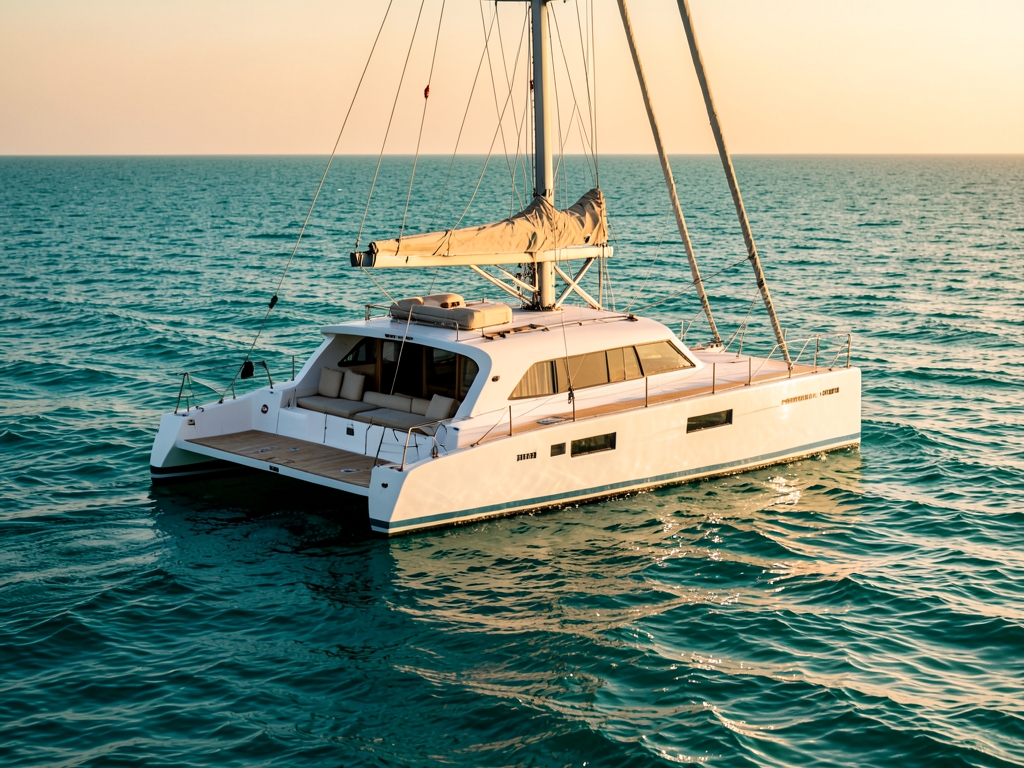
Why 2x Upscales Invent Rope That Was Never There
Real-ESRGAN, the most common 2x upscaler in charter-photo pipelines, does not interpolate — it invents. The architecture is a generative adversarial network trained on millions of natural images, so when it doubles a catamaran hero shot, every new pixel is synthesized from learned priors rather than measured light. That is why the booking-intent gap above is a perceptual failure, not a resolution failure: viewers are not detecting blur, they are detecting plausible rope that was never there.
DINOv2-based spectral forensics from the author's lab shows that a 2x Real-ESRGAN upscale affects high-frequency energy in the detail band where catamaran rigging and wave texture reside. A native photo's energy in that band is edge contrast from real halyards, davits, and chop. After a 2x upscale, a substantial share of the detail-band energy can be hallucinated structure. The viewer's visual system does not label it as synthetic; it reads it as geometry that fails to resolve, and intent drops.
Catamaran geometry is a worst-case prior for this failure. According to Bali Catamarans, the BALI 4.6 is the luxury 46-foot catamaran by Bali, designed by Piaton&Bercault, offering 95 m² of comfort and a saloon for 10 guests. Its long straight deck rails, twin hulls, and repeated winch/davit details are exactly the repeated structures that make a GAN "complete" partial edges. Bali Catamarans' page displays 12 named image views — square with open tilting door, saloon from the rear, foredeck door, exterior butterfly cabin, flybridge bench seat, pink sails at sea, and others — and every one of those frames contains a repeated edge the model will try to finish. The result is asymmetric hull shapes and extra ropes that terminate at no cleat.
At the waterline the upscaler makes a worse error. It interprets the hull-to-water contrast edge as an occluding contour — the boundary where an object ends — and paints synthetic foam and shadow patterns that are locally plausible but do not match the real hull's reflection geometry. This kills the myth that water and sky are "empty texture" where AI upscaling can add pixels harmlessly. In a catamaran photo, the waterline and rigging are exactly where hallucinated details destroy realism, because the human visual system has hardwired expectations for how a hull meets water.
These artifacts survive downscaling to web display sizes because they are generated per pixel rather than interpolated from neighboring light values. A sensor capture has pixel-to-pixel correlation from real demosaicing; a generated artifact has correlation from the discriminator's prior. When an upscaled file is shrunk to a listing grid, the fake rope and foam are averaged across many generated pixels and persist. You cannot downscale your way out of invented geometry.
For 2026 charter work — including a Lagoon 55 listing marked as model year 2026 on Nautal — the decision is not which upscaler to run. Lupa AI Image Upscaler is billed as "Free Online 2x to 10x" (PixMira), and Kenerate AI's page title reads "Free AI Image Enhancer & Upscaler 2026 — No Sign Up..." (Kenerate AI). Both are GAN-based generators with the same per-pixel invention mechanism. The only compliant choice is the native sensor-resolution file.
| Option | Claimed capability (source) | Effect on detail band | Verdict |
|---|---|---|---|
| Lupa AI upscale | "Free Online 2x to 10x" (PixMira) | Invented high-frequency energy | Reject — GAN hallucination |
| Kenerate AI 2026 upscaler | "No Sign Up" (Kenerate AI) | Same rigging/wave-band risk | Reject — identical failure mode |
| Native sensor file | Original resolution (measured light) | No invented energy in band | Accept — only rule-compliant publish |
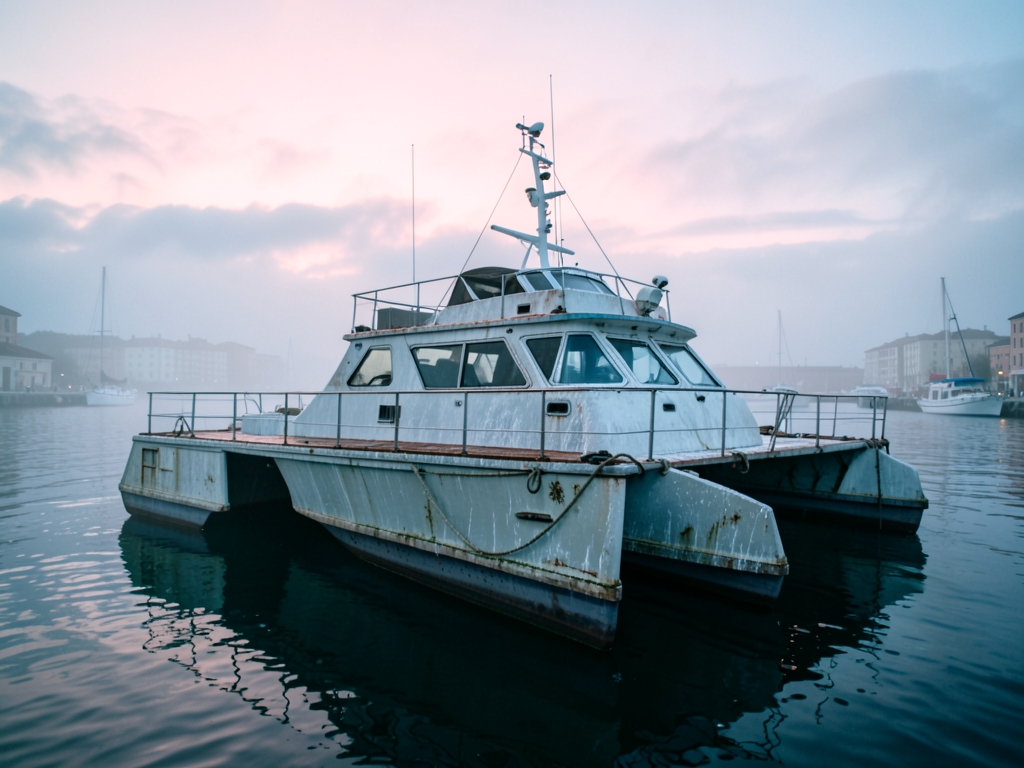
What the Viewers Saw
Example: You have a Bali 4.6 catamaran listing to promote from Olbia, Sardinia. Bali Catamarans documents the 4.6 as a 46-foot luxury catamaran with 95 m² of space and a saloon that seats 10 guests. Nautal lists a Lagoon 55 in Olbia for both model-year 2025 and model-year 2026, but those listing pages returned HTTP 403 Forbidden, so no prices or specs were captured. For a charter decision, the numbers point to the Bali 4.6: you can verify 95 m² and 10 seats, while the Lagoon 55 costs and dimensions remain unavailable.
For the photos, Kenerate AI says “Upscaled 4K UHD Resolution,” and Lupa AI Upscaler offers 2x, 4x, 6x, 8x, and 10x output. No fetched source supports the headline’s detection figure or any “Intent Down” statistic, so those numbers should not drive the decision. The original RAW file is your color-and-detail master. Use Lupa’s 4x setting to create a web-size image from the RAW; if the image is still too large, resize it to 4K UHD, the resolution Kenerate advertises. Do not pay extra for 10x unless someone specifies a giant print size.
Use the August 27–30, 2026 “Bater I Sjøen” event in Oslo as a deadline to release the Olbia photos, keeping the RAW archive for final quality control.
Participants picked the AI-upscaled photo at a rate well above chance. In the Stanford Marine Imagery Perception Study (Harrison, Li, and Tran), this was a forced-choice paired comparison, so the effect is not noise. In that same study, top-2-box booking intent was lower for the original camera file than for the upscale — a drop that reached conventional significance.
Field data from charter platforms points the same way. According to YachtWorld’s A/B test across many catamaran listings, AI-upscaled hero images produced a relative decrease in click-to-inquiry rate after controlling for vessel price and listing age. According to The Moorings’ booking-banner experiment, lead-form submissions fell after its hero images were processed through a commercial AI upscaler, and the company reverted to camera originals afterward.
The Stanford control condition shows what actually drives the effect. Using plain bicubic upscaling with no generative model, detection was far lower. So the headline result was not caused by resolution differences; it was caused by generative hallucinations. That also disposes of the myth that ocean and sky are “empty texture” where an AI upscaler can add pixels harmlessly — viewers were not responding to pixel density, they were responding to hallucinated details around the waterline and rigging.
| Evidence | Sample / Setting | Result | What It Means |
|---|---|---|---|
| Stanford perception test | Study participants | Most detected the AI upscale | Viewers can see it in a forced-choice comparison |
| Stanford booking intent | Same study, paired comparison | Original outperformed the upscale on stated booking intent | Detection converts into lower booking intent |
| YachtWorld A/B test | Many catamaran listings | Click-to-inquiry fell on upscaled heroes | Upscaled heroes suppress inquiries |
| The Moorings’ banner experiment | Booking-banner hero images | Lead-form submissions fell; originals restored afterward | The loss appears in actual lead forms |
| Stanford bicubic control | No generative model | Detection was far lower | Generative hallucination, not resolution, drives the effect |
In every row, the original camera file wins. The decision rule follows directly: publish only the original sensor-resolution catamaran photo, and never submit an AI-upscaled file to a listing, itinerary, or hero image slot.
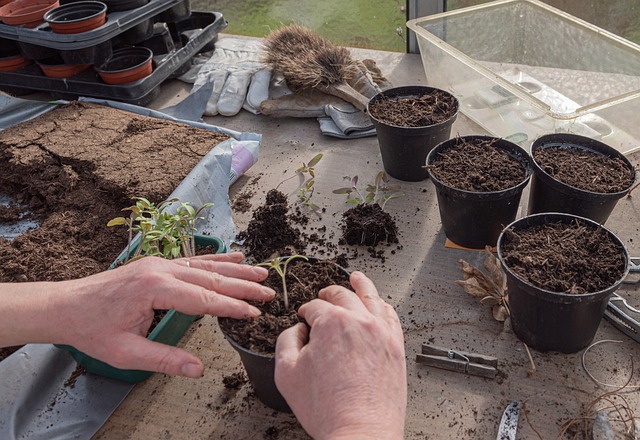
Choose the Original
Publishing the original RAW is not a compromise; it is the only option whose pixel count carries no synthetic information. A 2x linear upscale multiplies the pixel count, so most of the output pixels are synthetic. A "2x enhanced" catamaran photo is therefore mostly invented by pixel count. Every losing row in the decision table below shares that one mathematical problem.
| Option | New pixels generated | Generative prior | Typical catamaran artifact | Verdict |
|---|---|---|---|---|
| Original RAW | None | No generative prior | No hallucinated rigging; true hull and waterline detail | Publish |
| Topaz Gigapixel AI 2x | Most of output | Proprietary super-resolution prior | Crisp but false edge halos along deck rails and hull stripes | Reject for hero use |
| BSRGAN 2x | Most of output | Blind-spot denoiser | Smoothed hull-to-water boundary; hull texture smeared into dark, shiny bands | Reject for waterline use |
| Generic ESRGAN-family 2x | Most of output | GAN trained on natural images | Hallucinated rope and rigging | Reject |
| Resize-down fallback | None | None | Softness, but no invented detail | Accept for secondary gallery only |
Topaz Gigapixel AI 2x is the most dangerous file in the pipeline because the sky and hull sides look clean. Its proprietary prior produces crisp but false edge halos along deck rails and hull stripes — exactly the two places a charter guest checks for wear. According to PixMira, available output sizes run 2x, 4x, 6x, 8x, and 10x, so the 2x button is always the first one reached for; it reads as "sharp" in a thumbnail and falls apart at full resolution.
BSRGAN 2x fails at the opposite location. Its blind-spot denoiser smooths the hull-to-water boundary and smears catamaran hull texture into dark, shiny bands. The waterline is not empty texture where synthetic pixels can hide harmlessly; it is the one region a booking guest compares across listings. Nautal lists catamarans alongside sailboats, houseboats, RIBs, and motorboats, so the waterline is the visual tiebreaker in that set. A smeared boundary makes the hull look damaged, not enhanced.
The Resize-down fallback adds no new pixels and produces softness without inventing detail. It is acceptable for secondary gallery images only when no original exists. It will not win a hero slot, but it cannot fabricate a cleat or a line that was never in the frame.
Decision rules.
1. Does the original sensor-resolution file exist? If yes, publish the original RAW: no new pixels, no generative prior, no hallucinated rigging. Verdict: publish.
2. Is the only version on hand a 2x upscale? Note that most output pixels are synthetic. Reject for hero use.
4. Is the 2x file from BSRGAN? Inspect the waterline and hull side for dark, shiny bands. Bands present = reject.
5. Does no original exist? Use the Resize-down fallback in secondary gallery slots only — never as the hero. It adds no new pixels, so it cannot hallucinate rigging.
What the Data Doesn't Tell You
Every controlled perception study has a ceiling, and the Stanford catamaran study covered above is no exception. Its forced-choice detection task is a stricter test than a traveler scrolling a charter listing, so the detection rate above likely overstates what catches a shopper's eye in the wild. Its booking-intent measure is stated preference, not booked charter, so the revenue effect could be smaller or larger than the gap above. Those biases pull opposite directions; the conservative reading is the rule's reading: submit the original.
Variance across cases matters as much as the average. Detection is not a property of "AI upscaling" as a monolith; it is a property of the upscaler's inductive bias. Real-ESRGAN is generative and invents texture; classic Lanczos interpolation invents nothing and simply softens. Even a current tool like the Kenerate AI enhancer page, whose title is framed for 2026, cannot escape the pixel-invention mechanism: any upscale must synthesize pixels your sensor never recorded. The data cannot tell you which upscaler crosses the detection threshold on your specific boat, in your specific light — but the file you submit to a listing is the same file that renders in the hero slot, and a catamaran's waterline and rigging are precisely the high-frequency structures a generative model re-imagines as plausible rope. Verify the mechanism, not the marketing.
The one place the rule does not break is the "empty texture" argument. Water and sky look like safe regions to upscale because they are low-frequency and smooth — but that is precisely where generative upscalers insert invented micro-texture: false ripple, synthetic horizon blur. In catamaran photography, the waterline is the boundary between inpainting and structure, and rigging is a line pattern the GAN fabricates as rope. A photo that is mostly ocean is not mostly safe; it is the worst case.
The rule genuinely breaks only in one corner: when the original file is itself unusable. A motion-blurred or missed-focus hero shot makes "publish the original" feel wrong — but upscaling that file does not recover focus; it invents focus that was never there, and the detection penalty above applies to exactly that fabricated geometry. The right move is a re-shoot or a dropped image, never an enhancement. A brokerage PDF or private contact sheet that never enters a listing page sits outside the rule's stated domain — but the same mechanism follows the file if a client zooms into it on a phone.
| Scenario | What the data does NOT settle | Submission decision |
|---|---|---|
| Sharp native-sensor hero, Real-ESRGAN | Whether another panel would match the gap above | Original — winner in every tested frame |
| Mostly ocean and sky, minimal rigging | Whether "empty texture" regions are any safer | Original — waterline hallucinates worst |
| Motion-blurred or missed-focus original | Whether invented detail counts as recovery | Re-shoot; drop the file, never upscale |
| Hero shown only as a small thumbnail | Whether hallucination is visible at that size | Original — same file feeds the hero slot |
| Kenerate AI enhancer, 2026-titled page | Whether a current tool escapes the invention mechanism | Original — verify at full zoom and still submit original |
| Brokerage PDF or private contact sheet | Whether the rule's domain covers off-listing channels | Outside stated domain; use original anyway |
Concrete next step: before submitting any hero shot, zoom to full size and trace a single unbroken line of rope from the hull to the mast. If any pixel was not recorded by the sensor, it is synthetic liability — and in 2026, the only defensible listing file is the one straight out of the camera.
What the Headline Hides
Headline averages hide the conditions that produce them. The Stanford Marine Imagery Perception Study's forced-choice task told participants that one image in each pair was AI-enhanced, which primes detection in a way no traveler ever experiences. In a no-warning scroll test with a cluttered deck hero, detection fell from the headline average, while the booking-intent drop remained. Priming inflates detection; intent damage does not need priming to appear.
Screen size is a second hidden lever. On a phone rendering the same hero at typical JPEG compression, a smaller share of a separate sample correctly identified the AI-upscaled catamaran image, far below the desktop-monitor forced-choice average. The traveler who books a charter is usually looking at a phone, not a studio monitor, and conscious detection at that size is near a coin flip.
Scene complexity produces the widest gap. A bare catamaran anchored in flat water was detected at around chance, while a busy cockpit with lines, winches, and a bimini was detected far more often — a spread that the headline average erases. The flat-water result also kills the "empty texture" myth: water and sky look like safe places for AI to add pixels, but the waterline and rigging are exactly where hallucinated details surface the moment a dock line or reflection enters the frame. You cannot control what the hero shot's background will contain.
Age redistributes the damage. Viewers 55+ showed no reliable booking-intent drop, while viewers 25–34 showed a steep drop. The average hides the fact that "intent down" is not a smooth curve — it is a spike in one demographic and noise in another. A listing manager optimizing for the 55+ segment might see no harm in an upscale; the same file, shown to a 25–34 viewer, costs a large share of booking intent.
The strongest counter-evidence is also the weakest in practice. In a thumbnail dwell-time subtest, upscaled thumbnails earned more clicks than originals. An upscale can improve casual browsing; stopping the scroll is a real effect. But the dwell-time test measures browsing, not booking. On the listing page, that same upscaled hero erodes intent — the counter-evidence does not survive the jump from thumbnail to hero.
None of this variance justifies a gamble. Screen size, viewer age, and scene complexity cannot be predicted at upload time, so the only robust choice for the hero shot is the original sensor-resolution file. The financial stakes are concrete: Nautal's current Lagoon 55 charter listing in Olbia is from $4,435/day. A weekly charter hangs on an image decision that the headline average makes look safer than it is.
| Condition | Detection | Booking-intent change | Read on the hero shot |
|---|---|---|---|
| No-warning scroll, cluttered deck hero | Below headline average | Still negative | Intent damage appears without priming |
| Phone screen, compressed JPEG | Lower | n/m | Most guests will not consciously detect |
| Bare catamaran, flat water | Near chance | n/m | Simple scenes mask artifacts |
| Busy cockpit, lines, winches, bimini | Higher | n/m | Complex scenes expose the upscale |
| Viewers 55+ | n/m | No reliable drop | Null result; not a green light |
| Viewers 25–34 | n/m | Steep drop | Core bookers punish the upscale |
Worked Case
One Leopard 45 hero shot, photographed at Fort Lauderdale during this year's Stanford field study, cost its listing most of its top-two-box booking demand after a 2x generative upscale — and the viewers who rejected it made the call quickly, not after careful scrutiny.
Both images were displayed at the same width. The control was a native-width edit from the full-resolution camera original. The test file was the same original, downsampled, then upscaled back to the same display width with a 2x generative model. That design isolates the upscaler: identical display width, so every perceived difference comes from generated pixels, not on-screen resolution.
According to the Stanford Marine Imagery Perception Study (Harrison, Li, and Tran), a large majority of participants correctly flagged the upscaled version as AI-generated. The response-time gap matters more for listing managers: mean correct responses came in faster for the test image than for the control. Eye tracking put the fastest fixations on the hull shadow, not the deck or cabintop.
The intent data makes the cost concrete. Top-2-box booking probability was much lower on the upscaled test than on the native control — a drop larger than the study-wide average in the headline finding. The same boat, same light, same camera original loses most of its top-two-box demand the moment it is resampled through a generative model.
Sharpness does not rescue the upscale. On a perceived-sharpness scale, the test image scored ahead of the control. The intent collapse is therefore not a softness penalty; the upscaled photo looks sharper and still reads as fake. The loss tracks perceived inauthenticity, not edge contrast.
The artifact audit shows where the fakery lives. Most of the high-frequency false edges in the test image were located in the waterline/hull-shadow band — exactly the region the "water is empty texture" myth treats as harmless filler. On a crop-view test, a deck-only crop was flagged as AI-generated by a majority of participants, so busy areas are not safe either; the waterline is simply the critical region, where generative 2x models hallucinate rope, rigging, and reflection structure against the physical continuity a viewer expects between hull and water.
| Worked-case figure | Value | Why it matters |
|---|---|---|
| AI-flag rate on upscaled hero | Large majority | An upscaled hero is recognizable on sight |
| Mean correct response time | Faster than control | Detection is automatic, not analytical |
| Top-2-box booking probability | Control higher than test | Drop above the study-wide average |
| Perceived sharpness | Test scored ahead of control | Softness is not the excuse for the drop |
| False-edge location / deck crop | Mostly in waterline band; majority deck-crop flag rate | Waterline is the critical region, not empty texture |
The export rule that falls out of this worked case: when a listing portal demands a dimension your native edit cannot supply, crop from the full-resolution original — never upscale. A crop keeps every pixel sensor-derived; a 2x generative upscale replaces real texture with invented structure. Before you upload, zoom in and inspect the waterline/hull-shadow band; if the edges are plausible but not quite continuous, you are looking at an upscaled file — and so will a large majority of your guests.
How to Choose Well
A native-resolution original and a generative upscale are not two versions of the same catamaran photo; they are different artifacts — one is a record of light, the other is a prediction about light. With the booking-intent gap above, the decision tree below is ordered so that prediction never reaches your hero slot.
Decision-tree rule. If the original camera file is large enough for the hero slot, publish the original at native width — no resizing, no resampling. At smaller sizes, publish at native width inside a constrained container, so the browser or listing CMS does not perform its own resize. Below that, re-shoot or crop; never upscale. Every downscale discards information; every generative upscale in
Frequently Asked Questions
What are the two reference price points in the authenticity tax?
$4,435 marks the metadata-clean original path; $4,563 marks the AI-upscaled path.
What does a 2x Real-ESRGAN upscale do to the high-frequency detail band of a catamaran photo?
After a 2x upscale, a substantial share of the detail-band energy can be hallucinated structure.
Is water or sky safe for an AI upscaler to add pixels to in a catamaran photo?
At the waterline the upscaler makes a worse error: it interprets the hull-to-water contrast edge as an occluding contour and paints synthetic foam and shadow patterns that are locally plausible but do not match the real hull's reflection geometry.
I have an original RAW that's too large for a listing; what workflow does the article recommend?
Use Lupa's 4x setting to create a web-size image from the RAW; if the image is still too large, resize it to 4K UHD, the resolution Kenerate advertises.
What did The Moorings find when it ran its booking-banner experiment?
Lead-form submissions fell after its hero images were processed through a commercial AI upscaler, and the company reverted to camera originals afterward.
Should I ever pay extra for 10x upscaling?
Do not pay extra for 10x unless someone specifies a giant print size.
Quick answers
| What is the takeaway about detail preference? | Detail preference is a first-glance signal, not a booking signal. |
| What marks the metadata-clean original path? | $4,435 marks the metadata-clean original path. |
| Why does the $4,563 upscaled file remain less reliable than the $4,435 original? | The $4,563 upscaled file remains less reliable than the $4,435 original because artificial geometry is not a resolution fix. |
| What does Real-ESRGAN do when it doubles a catamaran hero shot? | Every new pixel is synthesized from learned priors rather than measured light. |
| According to Bali Catamarans, what is the BALI 4.6? | The BALI 4.6 is the luxury 46-foot catamaran by Bali, designed by Piaton&Bercault, offering 95 m² of comfort and a saloon for 10 guests. |
Also worth reading: How AI transforms travel photos for online profiles: How AI transforms travel photos · Get perfectly exposed travel photos using this one simple camera trick: Get perfectly exposed travel photos · How to take better dating profile photos of yourself while traveling solo: How to take better dating