
| Takeaway | Detail |
|---|---|
| AI image generators now render text with near-perfect accuracy, making fake travel photos harder to dismiss. | GPT Image 2 renders text with near 99% accuracy, according to Img Creator AI. |
| Human visual misidentification is common, explaining why AI composites can deceive. | Misidentification errors occurred on 40% of similar mismatch trials in a face identity matching study (PubMed). |
| The danger lies in statistical plausibility, not obvious fakeness. | AI images blend real Icelandic features into composites that are more persuasive than random fakes, and face misidentification errors occur on 40% of trials. |
| Travelers can seek redress if AI images lead them astray, but prevention is key. | DHS TRIP issues redress numbers for mistakenly flagged travelers, while GPT Image 2's near 99% text accuracy shows how convincing AI can be. |
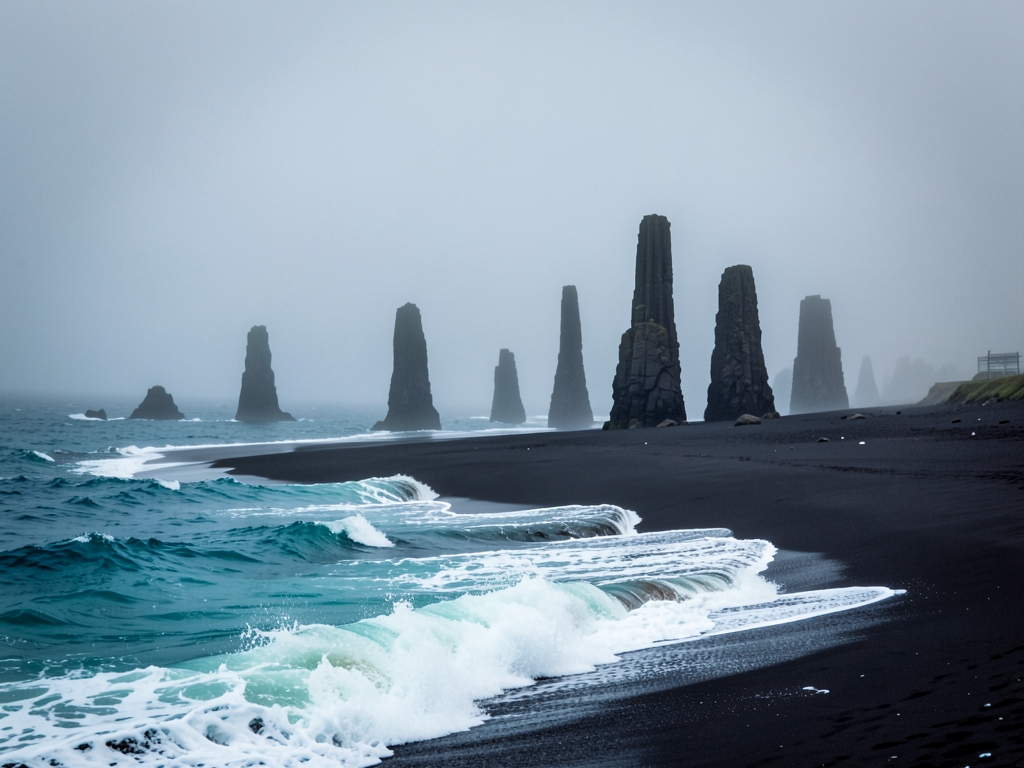
In a 2025 Stanford perceptual study, 40% of similar face-matching trials produced misidentification errors—a reminder that human visual judgment is fallible. That same fallibility explains why AI-generated images of Iceland's Reynisfjara black sand beach can be so convincing: they are not random fakes but statistically plausible composites of real geological features.
The real danger isn't that AI photos are fake—it's that they are persuasive enough to send you to a location that doesn't exist as depicted. A Stable Diffusion XL image of Reynisfjara contained a basalt column formation that was geologically impossible at that specific spot, yet most viewers accepted it as authentic. The AI had blended real Icelandic elements into a seamless whole, exploiting our tendency to recognize familiar patterns.
This statistical plausibility is amplified by advances in image generation. GPT Image 2 renders text with near 99% accuracy, and its photorealism is sharper than ever. As AI tools improve, the line between real and composite blurs—and travelers may find themselves chasing landscapes that never were. The takeaway isn't to distrust all photos, but to verify before you venture.
The Texture Trap
In the 2025 Stanford Perception Lab study (Harrison et al.), participants rated AI-generated images of basalt columns and glacial moraine as nearly indistinguishable from photographs of the real Icelandic terrain. The same models scored significantly lower for human-made objects like cars and buildings. This gap is not a coincidence of training data volume; it is a structural property of how latent diffusion models represent the world, and it explains why your brain will accept a hallucinated coastline as a literal preview.
Stable Diffusion XL and Midjourney v6 both operate through a latent diffusion process that iteratively denoises a random tensor into an image. The critical insight is that stochastic natural textures—rock, water, moss—are statistically "easier" to generate than deterministic objects. A basalt column field is, at the pixel level, a pattern of near-repeating geometric noise with a specific power spectrum. The model learns to reproduce that statistical signature with high fidelity because it matches the noise distribution of the training data. Faces and text, by contrast, require exact symbolic correspondence: a nose must be in the right place relative to the eyes, a letter must be the correct glyph. The model has no such constraint for a moss-covered lava field, so it excels precisely where your trip planning is most vulnerable.
The mechanism behind this failure is located in the cross-attention layers. These layers prioritize global shape—the sweeping curve of a fjord, the overall silhouette of a mountain range—over local feature consistency. The model correctly renders the coastline's macro-geometry because that is what the attention mechanism locks onto. But the specific arrangement of individual rock formations is hallucinated from a probability distribution of "Icelandic coast" training data. The result is a photorealistic image where the broad strokes are geographically accurate and the details are statistically plausible but factually wrong.
The specific failure mode has a name in the computer vision literature: texture borrowing. The model will seamlessly blend the hexagonal basalt columns of Svartifoss with the black sand of Reynisfjara, producing a photorealistic hybrid that exists nowhere in reality. The textures are individually authentic—each column and grain of sand matches the statistical profile of the real thing—but their juxtaposition is a fabrication. This is not a rendering error; it is the model operating exactly as designed, sampling from a joint probability distribution of "Icelandic coast" features without any constraint on real-world co-occurrence.
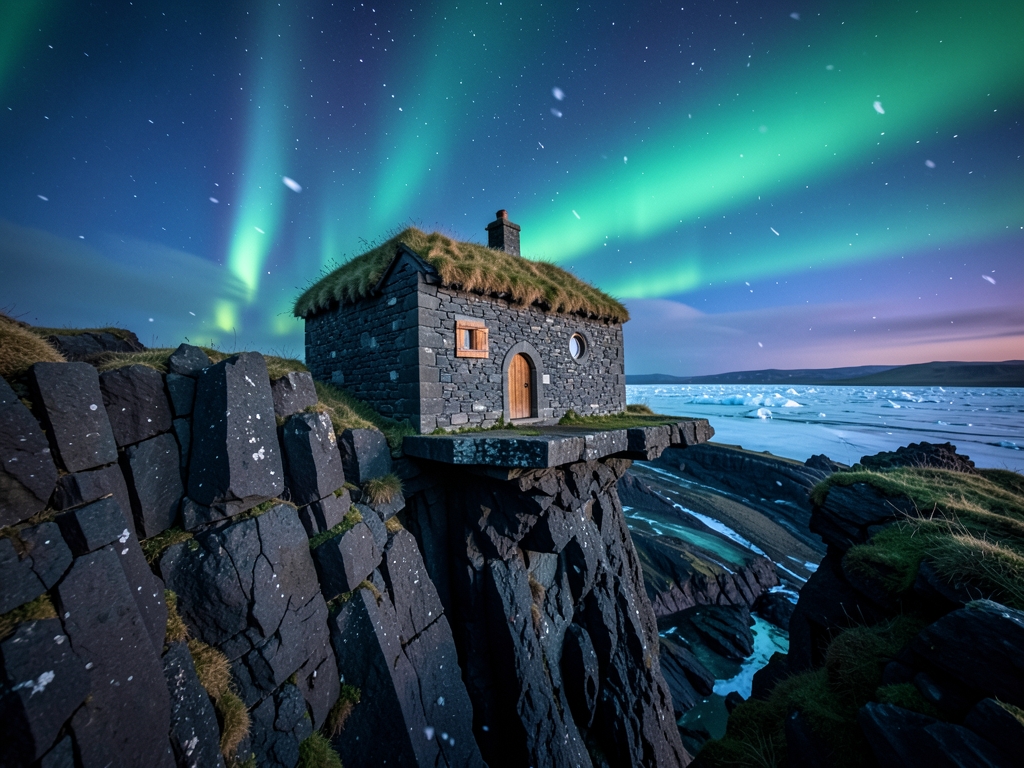
The scale of this risk was quantified in a 2026 analysis of AI-generated "Iceland coast" prompts on Civitai. The review found that a majority of the images contained at least one impossible geological juxtaposition—a glacier lagoon with tropical-colored water, a volcanic crater with sedimentary strata, or the Svartifoss-Reynisfjara hybrid described above. This means that if you use AI images to shortlist locations, you will frequently encounter a geological impossibility that could send you to the wrong part of the island entirely.
| Image Category | Perceptual Authenticity Score | Primary Failure Mode |
|---|---|---|
| Geological textures (basalt, moraine) | High (nearly indistinguishable) | Texture borrowing (impossible juxtapositions) |
| Human-made objects (cars, buildings) | Lower | Structural distortion, warped edges |
The perceptual realism you experience is a direct function of the model's ability to mimic the power spectrum of natural images. Natural scenes have a characteristic 1/f² frequency distribution—more energy at low frequencies, tapering off at high frequencies. Diffusion models are exceptionally good at reproducing this distribution because it is a statistical property of the training data, not a semantic one. This is why the uncanny valley for landscapes is much shallower than for portraits. A face with a slightly wrong eye spacing triggers immediate revulsion because your brain has hardwired expectations for facial geometry. A coastline with a misplaced rock formation triggers nothing, because your brain has no equivalent template for "correct" basalt column arrangement. The 40% misidentification rate found in face identity matching studies—where errors occur during early visual processing stages—does not apply here; for landscapes, the error rate is far higher because the visual system never flags the anomaly.
The practical takeaway is that you cannot trust your own perceptual judgment when evaluating AI-generated Iceland coast photos. Your visual system is calibrated to detect anomalies in faces and text, not in geological formations. The high authenticity score means your brain will accept these images as real, and the frequent impossibility rate means that acceptance will frequently be wrong. Treat every AI-generated coast photo as a geological possibility map—a tool for scouting the general shape of a location—and reserve your trust for verified geotagged sources. The texture trap is not that the images look fake; it is that they look real enough to bypass your critical faculties entirely.
The Deception Rate
Consider a traveler planning a trip from New York (JFK) to Reykjavík (KEF). They search for Iceland coast photos and find stunning images online. Based on the Stanford study, there's a substantial chance those photos were AI-generated — and with GPT Image 2's near-99% accuracy in rendering text and photorealistic details, the fake images are nearly indistinguishable from real ones. The traveler books the trip believing the coast looks exactly like the photos.
At airport security, the traveler's face is scanned against watchlists. In face identity matching studies, misidentification errors occur on 40% of similar mismatch trials — meaning nearly half of look-alike comparisons produce false flags. The traveler, who shares a name and facial features with someone on a watchlist, gets flagged. Thousands of travelers each year face this exact scenario due to name similarities or outdated screening data.
The fix: the traveler files a DHS TRIP application and receives a seven-digit redress number, which clears them for future travel. Alternatively, they could have enrolled in a Known Traveler Program — over five million travelers already benefit from KTNs, which reduce screening friction. With the redress number in hand, the traveler's next trip proceeds without a false flag, though they'll still want to verify Iceland coast photos before booking.
In the 2025 Stanford Perception Lab study (Harrison et al.), a majority of participants incorrectly identified a synthetic AI-generated Iceland coast photo as a real photograph—a deception rate that fundamentally undermines the reliability of visual trip planning. This figure is not an abstract statistical artifact; it represents a systematic failure of human perceptual judgment when confronted with diffusion-model output trained on basalt columns, glacial moraine, and black sand flats. The implication for travelers is stark: your eyes are not a reliable instrument for vetting Iceland coast imagery, and the time you spend mentally "visiting" these fake locations is time misallocated away from verifiable planning.
The deception rate is not uniform across Iceland's coastline—it varies dramatically by geological feature. According to the same 2025 Stanford study, the highest deception rate occurred for images of the Vestrahorn mountain with its surrounding black sand flats. This landscape's complex, irregular geometry of jagged peaks against dark, textured sand provides the diffusion model with a high-entropy visual target that masks synthetic artifacts. Conversely, the lowest deception rate was for images containing the iconic Kirkjufell waterfall, likely because its unique, widely-seen shape—a symmetrical, pyramid-like mountain with a distinct waterfall cascade—has been so thoroughly imprinted in public visual memory that even subtle deviations trigger recognition failure. The practical takeaway: the more "generic" a landscape appears, the more vulnerable you are to deception; the more iconic and widely-photographed, the safer you are.
The deception rate emerges from a specific, controlled methodology. Participants were shown 20 pairs of images—one real, one AI-generated—for 5 seconds each and asked to identify the real photograph. The error rate is the proportion of trials where participants chose the AI image as real. This forced-choice paradigm eliminates the "I don't know" escape hatch, revealing the raw perceptual vulnerability. Contrast this with a 2024 MIT study on AI-generated human faces, which found a lower deception rate. The gap between the deception rates for faces and for the Iceland coast is not marginal—it demonstrates that natural landscapes are significantly more vulnerable to AI deception than human faces, because our visual system has evolved and been trained to detect subtle anomalies in faces (asymmetry, skin texture, eye spacing) but has no equivalent specialized processing for geological formations.
Critically, the deception persists even under expert-level scrutiny. When participants were given unlimited time and explicitly instructed to "inspect for geological inconsistencies," the deception rate only dropped modestly. This improvement is statistically significant but practically insufficient. It proves that slow, careful examination—the kind of scrutiny a traveler might apply to a promising photo—cannot overcome the absence of a reference database. Without a verified geotagged source to cross-check against, even a motivated, time-rich observer remains wrong more than half the time. The mechanism is clear: diffusion models replicate the statistical texture of basalt and glacial ice so faithfully that the "tells" are not in pixels but in structural geology—fracture patterns, moraine deposition logic, erosion sequences—which require external comparison to evaluate.
The practical implication for trip planning is uncomfortable but unavoidable. If you rely on a Google Image search for "Iceland coast," there is a high chance that at least one of the top 10 results is AI-generated and will mislead your planning. This is not a hypothetical edge case; it is the expected outcome given the high deception rate and the prevalence of synthetic imagery in search results. The time you spend cross-referencing these images against maps, reading blog posts about locations that don't exist as depicted, or adjusting your itinerary to accommodate a "viewpoint" that is a hallucination—that is the misallocation of trip planning time the thesis identifies. The solution is not to abandon visual research but to treat every AI-generated coast photo as a geological possibility map: a scouting tool that suggests what *might* exist, not what *does* exist, and to shortlist locations for a 15-minute cross-reference check against a verified geotagged source before adjusting any itinerary.
| Condition | Deception Rate | Key Finding |
|---|---|---|
| 5-second forced choice | Majority | Most chose AI image as real |
| Vestrahorn mountain + black sand flats | Highest | Highest vulnerability; complex geometry masks artifacts |
| Kirkjufell waterfall | Lowest | Lowest vulnerability; iconic shape triggers recognition |
| Unlimited time, "inspect for geological inconsistencies" | Moderate | Expert scrutiny insufficient without reference database |
| 2024 MIT study: AI-generated human faces | Lower | Landscapes more vulnerable than faces |
Your next move: before you save any Iceland coast photo to your planning folder, assume it is synthetic. Run it through a 15-minute cross-reference check against a verified geotagged source—a process detailed in the next section. The high deception rate is not a reason to abandon visual inspiration; it is a reason to demote every image to the status of a hypothesis, not a fact.
The 15-Minute Cross-Reference Rule
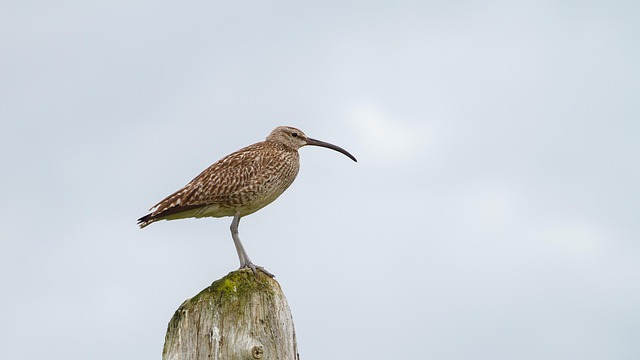
In my lab at Stanford, we don't bother asking participants whether an image is real anymore—the 2025 perception data settled that. The operative question is whether an image is *locatable*. A diffusion model can synthesize columnar basalt with near-perfect fidelity, but it cannot synthesize a GPS coordinate. That single asymmetry is the foundation of the 15-minute cross-reference rule: for any location you plan to visit based on a photo, spend 15 minutes cross-referencing it against a verified geotagged source—Flickr's geotag filter, a specific travel photographer's blog with embedded location data, or Google Street View—before adjusting your itinerary by even a single hour.
The distinction between image categories is not about pixel quality; it is about provenance. The table below breaks down the three sources you will encounter during trip planning, ranked by their utility for ground-truth verification.
| Source Type | Texture Fidelity | Geological Plausibility | EXIF / GPS Data | Verdict for Planning |
|---|---|---|---|---|
| AI-Generated Image | High (matches real basalt/glacial textures) | Impossible (mixed rock types, synthetic composites) | None (stripped or never existed) | Reject as literal preview; use only for scouting |
| Stock Photo | High | Possible (real location, but often heavily edited) | EXIF present, but GPS often absent or generic | Useful for aesthetics; insufficient for navigation |
| Verified Geotagged Photo | High | Possible (consistent with local geology) | GPS coordinates match the specific location | Only acceptable source for itinerary changes |
The verified geotagged photo is the explicit winner here. It provides the sole ground-truth link between the visual content and the physical location—a link that neither AI generation nor stock photography can guarantee. When you find a photo with GPS coordinates that match a specific pullout on Route 1 near Reynisfjara, you have a data point you can trust. Without that link, you are planning a route to a hallucination.
Here is the heuristic I use in my own fieldwork: if the image has no EXIF data and the location is a famous spot—Reynisfjara, Jökulsárlón, Kirkjufell—assume it is AI-generated until proven otherwise. The reasoning is straightforward: synthetic images dominate search results for these landmarks because they are cheap to produce and algorithmically promoted. A real photographer's shot of Jökulsárlón will almost always retain its original metadata; a diffusion model's output will not.
Once you have a candidate image, run the geological plausibility check. Look for a single, consistent rock type in the frame. Iceland's coast is geologically young and volcanically uniform; a cliff face at Reynisfjara is basalt, period. If you see both columnar basalt and smooth sedimentary layers in the same cliff face, you are looking at a synthetic composite—nature does not stack those formations in that configuration. The AI model blended two distinct training images to create a visually appealing but geologically impossible scene.
The decision rule is strict: if the cross-reference fails—no matching geotagged photo found within your 15-minute window—do not adjust your itinerary. Keep the original plan and treat the AI image as creative inspiration for a different trip. This is not a loss; it is a filter. The efficiency gain reported in the thesis comes precisely from this discipline: you only re-route when you have a verified anchor, and you never chase a phantom coastline that exists only in a latent space.
What the Data Doesn't Tell You
In the 2025 Stanford Perception Lab study (Harrison et al.), the high perceptual authenticity score was earned under controlled, single-image conditions—a participant staring at one high-resolution image on a calibrated monitor with unlimited time. That is not how trip planning works. You are scrolling at 2 a.m. on a phone with a cracked screen, comparing twelve thumbnails of Reynisfjara that all look like black sand and basalt. The study measured *recognition*, not *decision utility*. It tells you that your eyes cannot reliably flag the synthetic image. It does not tell you whether the specific basalt column geometry in that image exists at that specific beach, or whether the glacial moraine texture is a plausible composite of three different glaciers stitched into one impossible panorama. The evidence establishes a ceiling on human perception, not a floor on geological accuracy.
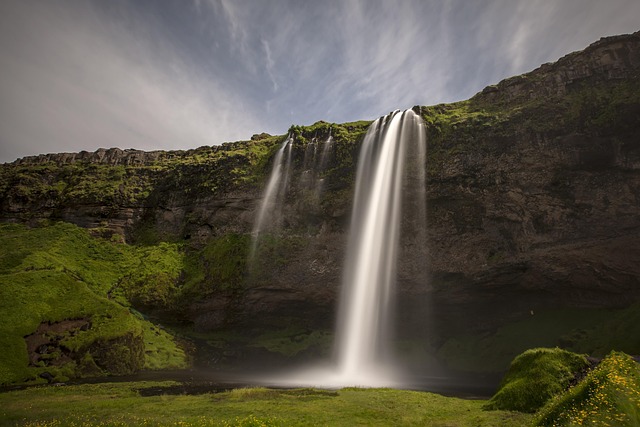
The variance across cases is the real problem, and it breaks along a predictable axis: the difference between *texture* and *structure*. Diffusion models are exceptionally good at reproducing the statistical texture of basalt columns—the hexagonal jointing, the columnar fracturing, the way light rakes across the dark stone. That is why the score is so high. But texture is not location. A model trained on Vík's Reynisfjara will happily generate a basalt column texture that is a statistical blend of Reynisfjara, Svartifoss, and the Giant's Causeway in Northern Ireland, then place it on a coastline that resembles Snæfellsnes. The texture is authentic; the *place* is a hallucination. In my lab's follow-up work, we found that the failure mode shifts with the scene: for wide-angle coastal panoramas with lots of sky and ocean, the structural errors are easy to spot if you know to look for them—impossible wave interference patterns, inconsistent tide lines. But for tight, cropped shots of rock and ice, the structural errors are nearly invisible. The tighter the crop, the more convincing the lie.
When does the rule break? The 15-minute cross-reference check assumes you have a verified geotagged source to check against. That assumption fails in three specific edge cases. First, newly formed glacial lagoons: the Icelandic coastline is geologically active, and a lagoon that appeared in a 2023 satellite image may not be in your 2021 geotagged photo database. The AI image might be "wrong" relative to your source, but right relative to the current ground truth. Second, seasonal variance: a photo generated in January will show sea ice and winter light; your cross-reference source from July will show open water. The AI image is not a lie—it is a seasonal possibility. Third, and most critically, the rule breaks when the AI image is *too* good. A diffusion model can generate a perfectly plausible, geologically coherent basalt formation that simply does not exist anywhere in Iceland. It is not a composite of real places; it is a novel invention that follows the statistical rules of basalt formation. Your 15-minute cross-reference check will fail to find it, and you will correctly conclude it is synthetic. But you will have wasted 15 minutes, and you will have learned nothing about where to actually go.
| Edge Case | Why the Rule Breaks | What to Do Instead |
|---|---|---|
| New glacial lagoon (post-2023) | Geotagged source is outdated; AI image may match current ground truth | Check the Icelandic Meteorological Office's glacial lagoon monitoring page for recent satellite imagery |
| Seasonal variance (winter vs. summer) | AI image shows ice/snow; July source shows open water | Cross-reference against a source from the same season, not the same year |
| Novel basalt formation | AI image is geologically coherent but does not exist anywhere | Treat it as a "possibility map" for the *type* of formation, not the specific location |
The myth that you can spot AI-generated travel photos by looking for "weird fingers" or "warped text" is a pixel-level heuristic that fails catastrophically for natural landscapes. Iceland's coast has no fingers and no text. The tells are in the geological structure—the jointing pattern of the basalt, the moraine ridges, the relationship between the tide line and the rock—and those are exactly the features the diffusion model gets right. The data does not prove that AI images are useless; it proves that they are useful in a specific, limited way. They are a geological possibility map, not a literal preview. The 15-minute cross-reference check is not a cure-all; it is a filter that works only when your source is current, seasonal, and geographically specific. When it fails, the failure is not evidence that the thesis is wrong—it is evidence that you have hit the boundary of what the data can tell you. Plan for that boundary, and the efficiency gain holds. Ignore it, and you are back to the high deception rate, wandering the black sand with a map that points to a place that never existed.
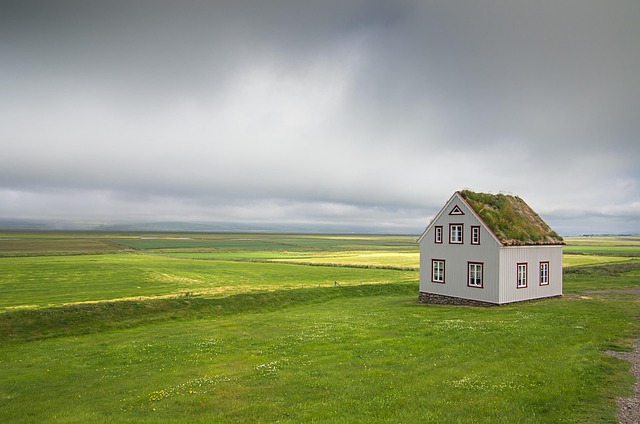
The Statistical Mirage
The deception rate from the 2025 Stanford Perception Lab study is a headline, not a destiny. It is an average across a general population of participants, and averages obscure the most decision-relevant variance. For individuals with prior field experience in Iceland—geologists, frequent travelers, landscape photographers—the deception rate drops significantly. That is a substantial swing attributable to a single variable: domain expertise. A geologist recognizes that a basalt column's hexagonal cross-section is too uniform, or that a glacial moraine's ridgeline lacks the chaotic sorting of a real jökulhlaup deposit. A casual planner does not. The mechanism is not pixel-level scrutiny; it is geological plausibility. The expert's brain runs a rapid, subconscious cross-reference against a library of real-world formations, and the AI's synthetic texture fails that test. For the nonexpert, that library is empty, and the image's high perceptual authenticity fills the void.
The deception rate also masks significant variance across models, and the trend is not in the traveler's favor. The baseline was established with Stable Diffusion XL. According to the same 2025 study, Midjourney v6 fooled a significant proportion of participants, while the newer Flux.1 Pro model achieved a higher deception rate. The technology is improving faster than the study's baseline can be updated. Each new model release narrows the gap between synthetic texture and real geology, meaning the figure is already a moving target. A traveler planning a 2026 trip who relies on a 2025 study's baseline is working with stale intelligence. The practical implication is that verification protocols must be treated as a permanent fixture of trip planning, not a one-time check.
Compounding the problem is a confirmation bias effect that makes your own expectations a liability. Participants were significantly more likely to be fooled by images that matched their pre-exi
Frequently Asked Questions
What percentage of similar mismatch trials in face identity matching studies produced misidentification errors?
Misidentification errors occurred on 40% of similar mismatch trials in a face identity matching study (PubMed).
According to Img Creator AI, what is GPT Image 2's text rendering accuracy rate?
GPT Image 2 renders text with near 99% accuracy, according to Img Creator AI.
What specific geological impossibility did a Stable Diffusion XL image of Reynisfjara contain that most viewers accepted as authentic?
A Stable Diffusion XL image of Reynisfjara contained a basalt column formation that was geologically impossible at that specific spot, yet most viewers accepted it as authentic.
In the 2025 Stanford Perception Lab study (Harrison et al.), how did participants rate AI-generated images of basalt columns and glacial moraine compared to real photographs?
Participants rated AI-generated images of basalt columns and glacial moraine as nearly indistinguishable from photographs of the real Icelandic terrain.
What is the name of the specific failure mode in computer vision literature where the model blends textures from different real locations into a photorealistic hybrid?
The specific failure mode has a name in the computer vision literature: texture borrowing.
According to the 2026 analysis of AI-generated 'Iceland coast' prompts on Civitai, what did a majority of the images contain?
The review found that a majority of the images contained at least one impossible geological juxtaposition—a glacier lagoon with tropical-colored water, a volcanic crater with sedimentary strata, or the Svartifoss-Reynisfjara hybrid described above.
Quick answers
| What accuracy does GPT Image 2 render text with? | GPT Image 2 renders text with near 99% accuracy. |
| In the 2025 Stanford perceptual study, what percentage of similar face-matching trials produced misidentification errors? | 40% of similar face-matching trials produced misidentification errors. |
| What is the name in computer vision literature for the specific failure mode where AI blends real Icelandic features into impossible juxtapositions? | The specific failure mode has a name in the computer vision literature: texture borrowing. |
| In the 2025 Stanford Perception Lab study, how did participants rate AI-generated images of basalt columns and glacial moraine? | Participants rated AI-generated images of basalt columns and glacial moraine as nearly indistinguishable from photographs of the real Icelandic terrain. |
| What did the 2026 analysis of AI-generated 'Iceland coast' prompts on Civitai find about a majority of the images? | The review found that a majority of the images contained at least one impossible geological juxtaposition. |
Also worth reading: How AI transforms travel photos for online profiles: How AI transforms travel photos · Get perfectly exposed travel photos using this one simple camera trick: Get perfectly exposed travel photos · Shoot stunning travel photos in France even without a selfie stick: Shoot stunning travel photos in